
Syntopical Learning
The world your child creates from the material you supply.

One afternoon last fall I had the boys in the home office as my wife was vacuuming on the opposite side of the house. As I sat on the reading chair with my youngest, keeping his tiny hands from the miscellany on the bookshelves, I noticed my oldest looking intently at something near the computer. It couldn’t have been anything on the monitors as the computer was completely shut down. Before I could figure out what had him transfixed he shouted, “Pieter Brueghel!” and pointed to the newly-purchased 2026 Angelus Press calendar hanging on the wall. On the November 2025 spread we saw:
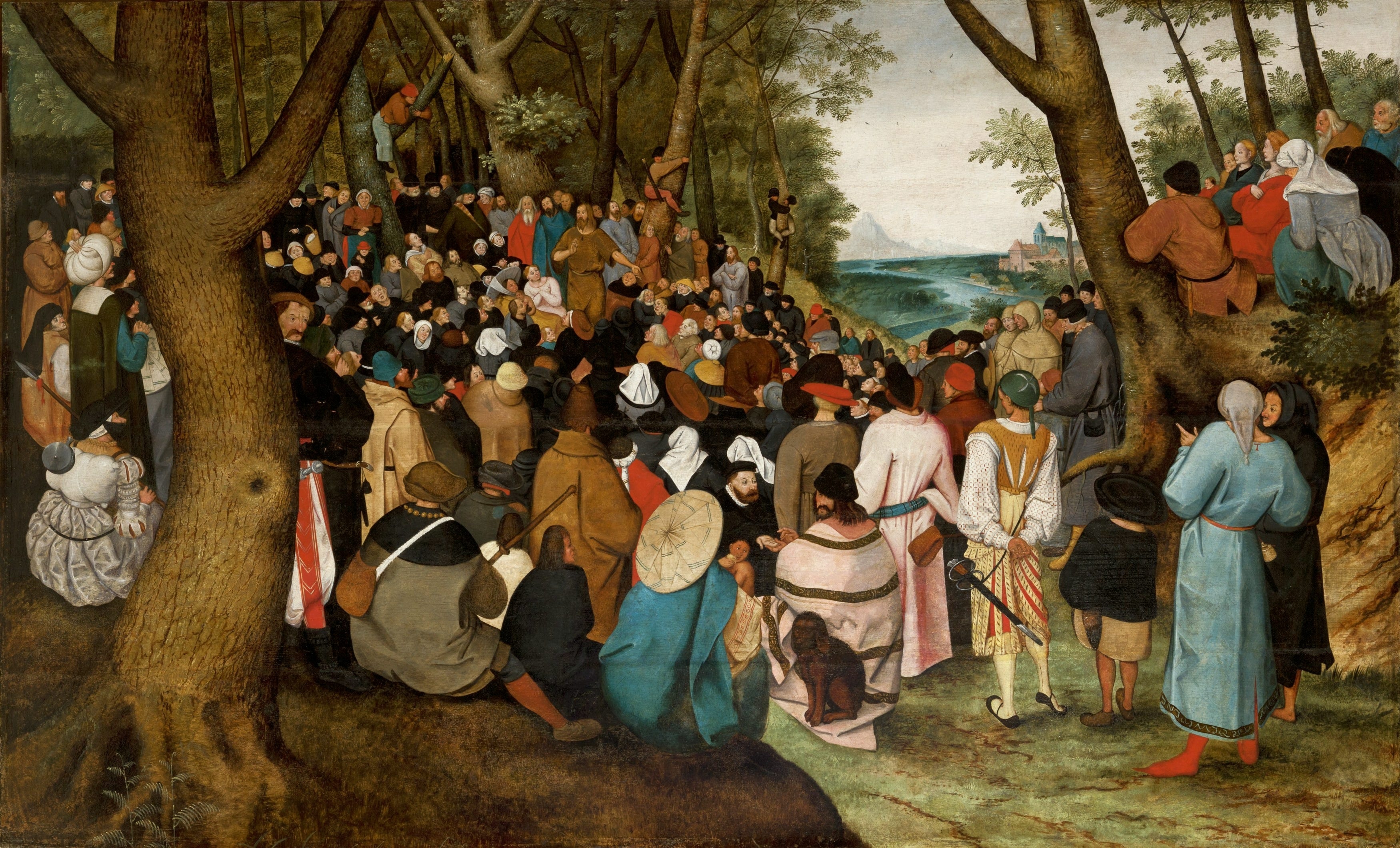

When asked why he showed so much interest to this name he answered, “I know him! Mama and I were looking at his pictures this week!” When I brought this up to my wife she got out the Memoria Press Art Cards for 1st grade and showed me the painting by (the elder) Brueghel they had studied:
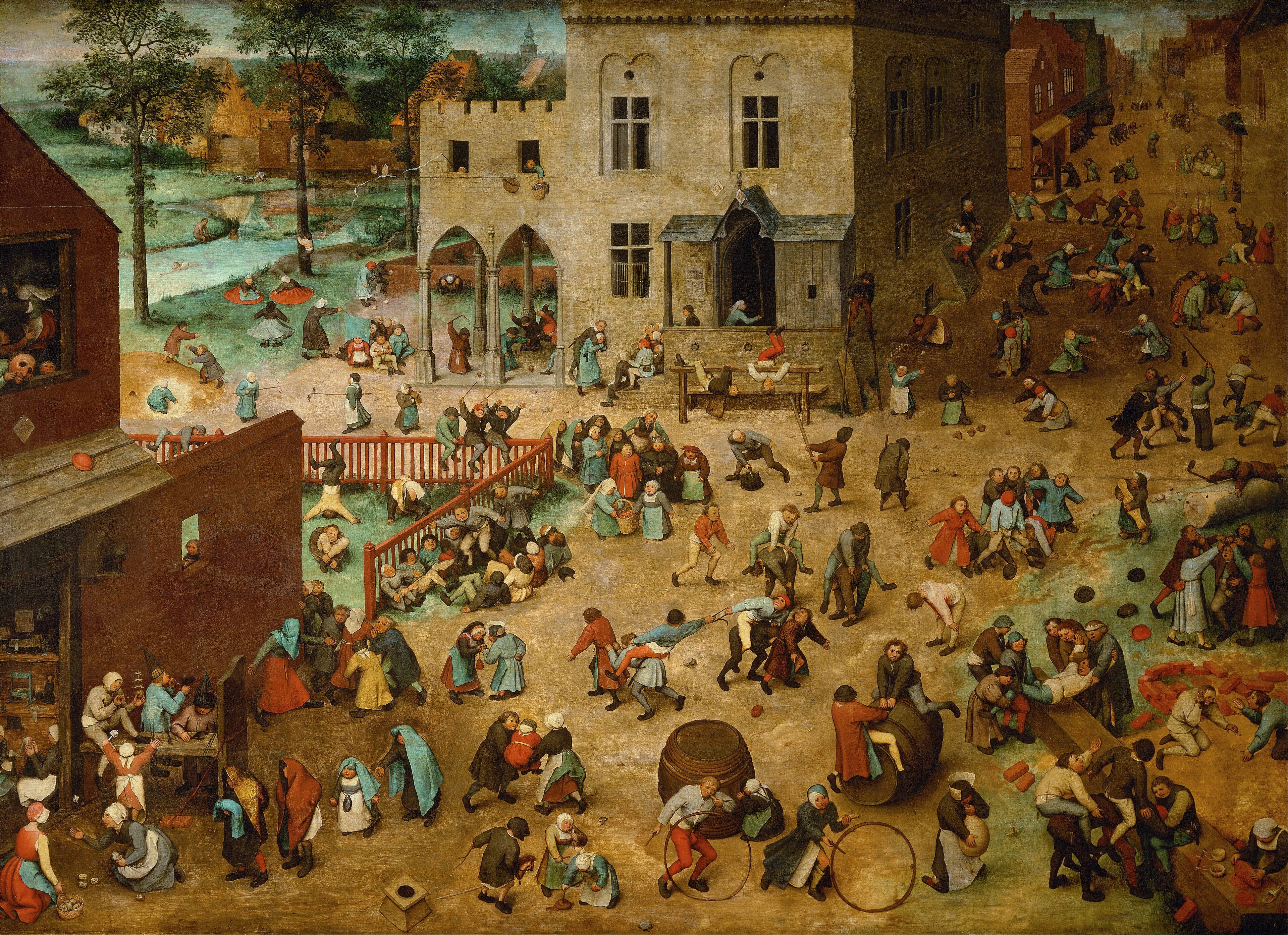
From then till now this episode of family life comes to my mind on a semi-weekly basis. In it I find a microcosmic validation of the entire gambit of decisions my wife and I make in raising our family. In a quiet room of the quiet house on our quiet property, surrounded by books and “dead” electronics, looking at the Renaissance calendar curated by the Traditional Catholic fraternity we have attached ourselves to, my six-year-old made his homeschool art appreciation lesson applicable in a matter of days. At six years old I was trying to memorize the first 150 Pokémon in order.
A couple of years ago before I got burnt out trying to read the Great Books of the Western World, I appreciated the overview offered in the first volume, The Great Conversation, especially on the subject of “syntopical reading.” This approach of reading is further expounded in How to Read a Book by Mortimer Adler, associate editor of the Great Books series, and defined by him as the ultimate goal of reading. Essentially, it’s important for you as a reader to correctly understand what an author is “getting at” when he writes a book, but it’s even more important to extract the topics present in books and see how different writers and genres handle the same topics across different works. That’s where one can base the idea of a “Great Conversation” occurring throughout the Western Canon. Freud is replying to Nietzsche who’s replying to Bacon who’s replying to Aquinas who’s replying to Augustine who’s replying to Plato. That’s also where the aptly-named Syntopicon index finds its home, showing would-be Internet trolls decades later that they weren’t the first to come up with skeptical questions concerning free will and the existence of evil.
I’m probably not original in positing that there could be “syntopical” approaches to multiple areas of life, as forums dedicated to the Pixar Theory can attest to. What I perceive constantly and care immensely about is a type of “syntopical learning” occurring in the rearing of my children. Critical parents know how different environments, company and recreations affect the attention, mood and worldview of their children. And so through a combination of intentional decision-making and logistical necessity certain things make the cut in being a part of your family’s life and other things don’t. As a thought exercise, let’s consider an assortment of old and new children’s series:
Beatrix Potter
Paw Patrol
Thomas the Tank Engine
Muppet Babies
Bluey
Little Bear
Dr. Seuss
Let’s say you let your children engage with everything; no filter except blindly trusting that someone says it’s appropriate for kids. The entertainment buffet presented above is broad enough to engage different personalities at varying degrees, so eventually your child would develop favorites. If you child really likes Thomas, then be ready for multiple train-themed birthday parties (I can speak from experience). But if your child really likes Muppet Babies, then be ready at the very least to raise an LGBT+ ally. Why? Gonzo-rella.
The light of thy body is thy eye. If thy eye be single, thy whole body shall be lightsome. But if thy eye be evil thy whole body shall be darksome. If then the light that is in thee, be darkness: the darkness itself how great shall it be!
—Matthew vi. 22–23.
People, children included, are little worlds unto themselves. These worlds are created city by city, house by house, brick by brick. The building blocks are what we let in through the senses: books, shows, movies, pictures, food, décor, liturgies. That trite adage that a child is sponge which soaks up everything is unfortunately very true, albeit misused in modern parlance. You only have so much influence on how your child builds his world, but you have all the control on what he builds it with.
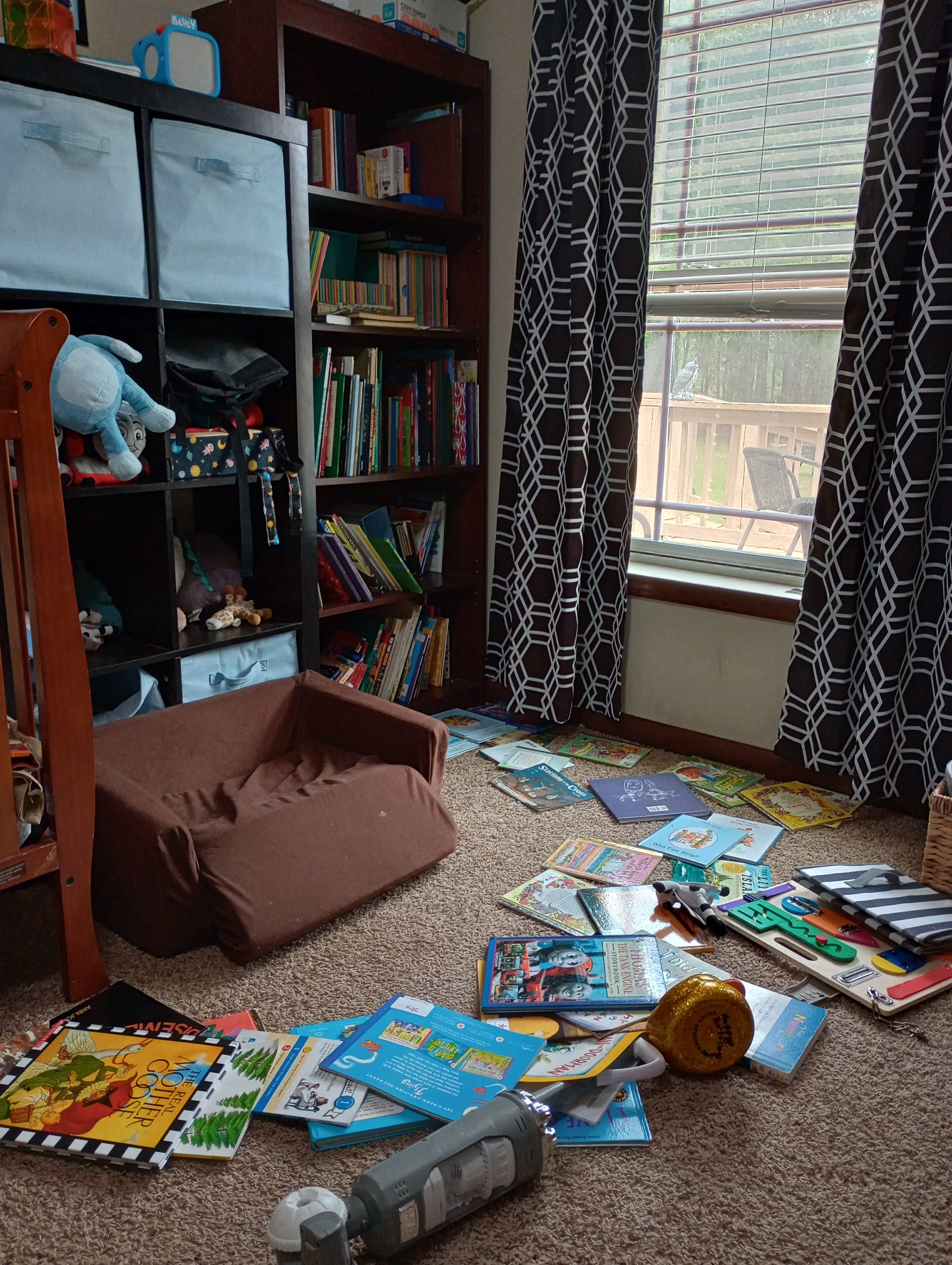
My wife and I catch a lot of flack for what we don’t expose our children to, the defense of which will be the subject of another post. However, there is much more worth in highlighting what their lives are filled with:
Free-range play on six fenced-in acres
Four species of outdoor farm animals
Traditional Catholicism
Catechism lessons graded by religious sisters
Classical homeschool education
The Angelus and Benedic, Domine before every meal
A home library of over 400 physical books
A Yoto player with over 35 cards
Gregorian chant
Miyazaki films
A mother who can teach them how to make lasagna and rosaries
A father who can teach them how to install a GFCI outlet and EndeavourOS
I’ll close with another anecdotal story. In one of our many trips to St. Anthony Mary Claret during the last Christmas Octave, we passed by a tackle shop at the edge of our town. We’ve passed this particular spot with its feather flag advertising “BAIT” at least 200 times along the same route. This time my eldest decides to ask, “Papa, what’s bait?” I said, “Some food you put on a trap to catch something.” After a few quiet seconds he says, “Just like Chichi the monkey.” Knowing that this came from an Angel Food story we listened to I said, “Yes, Mr. Cocoran used peanuts and watermelon to trap the stray monkey in his shed.” Several more quiet seconds pass before I hear, “Just like how the devil uses temptation to trap us and we fall into sin.”
Granted, the lesson was explicitly spelled out at the end of “Peanuts and Watermelons.” But the retrieval from memory, the word association and the true-to-life spiritual implications were all my son’s own. Fast forward to this past weekend when on Trinity Sunday he received his First Holy Communion after months of preparation with Catholic audiobooks, Correspondence Catechism and whatever ad libitum points we could squeeze in at bedtime prayer. Witnessing that perfect reception, the seamless rising with crossing of himself, the walking-on-air stride to his pew for his first thanksgiving… it was not what I expected but it is, nevertheless, unsurprising when reflecting on the cultivation which reached its final blossom at that moment. It was through the lived seen, carefully curated by his parents, that he was able to grasp the True Unseen and say to every passerby at the subsequent reception, “Jesus caused all this excitement!”
Visus, tactus, gustus in te fallitur,
Sed auditu solo tuto creditur.
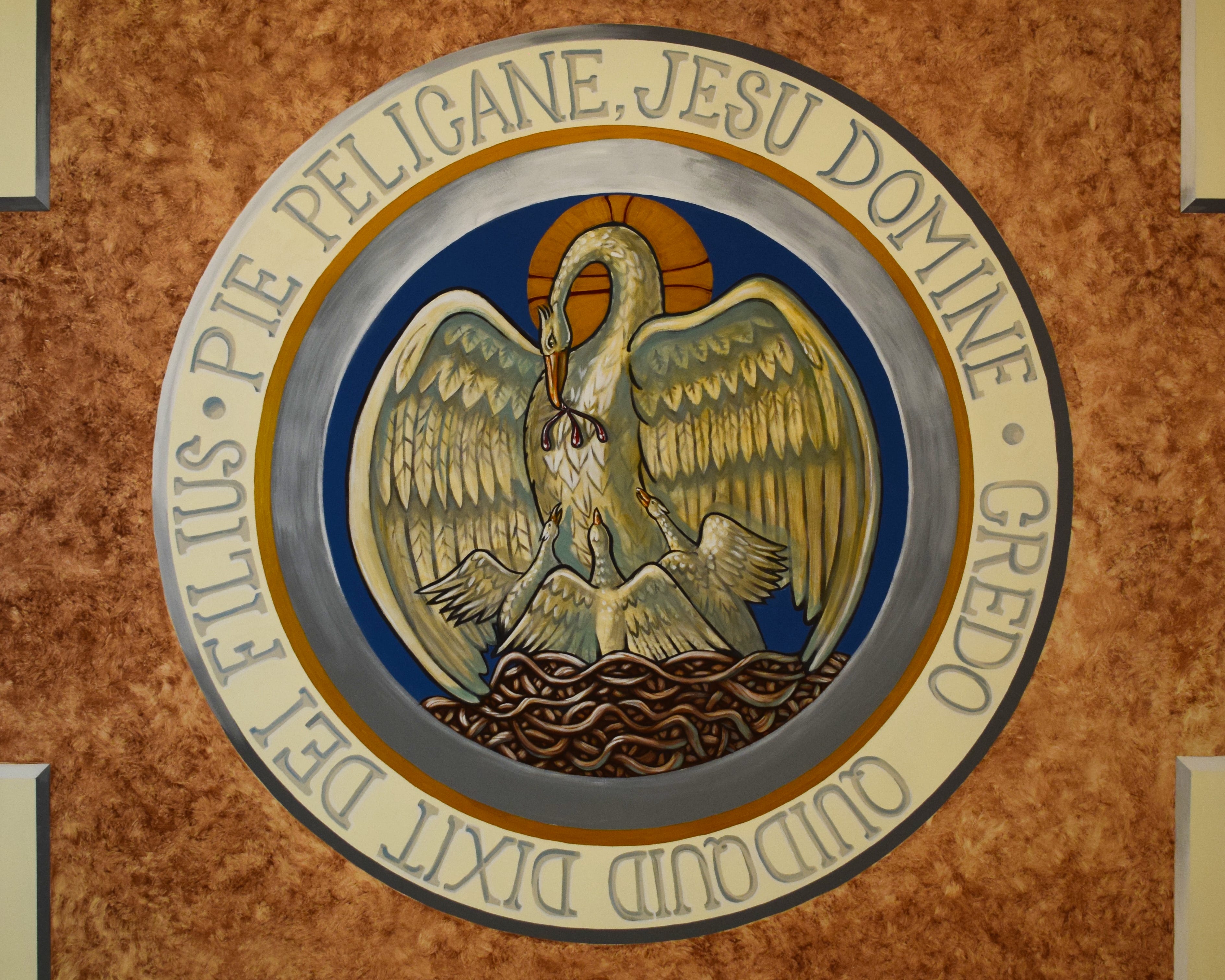
Credo quidquid dixit Dei Filius;
Nil hoc verbo veritatis verius.Not to sight, or taste, or touch be credit,
Hearing only do we trust secure;
I believe, for God the Son hath said it—
Word of Truth that ever shall endure.—Rev. Matthew Britt, O.S.B. in The Hymns of the Breviary and Missal
_-_ceiling,_Adoro_te_devote_excerpt.jpg)