

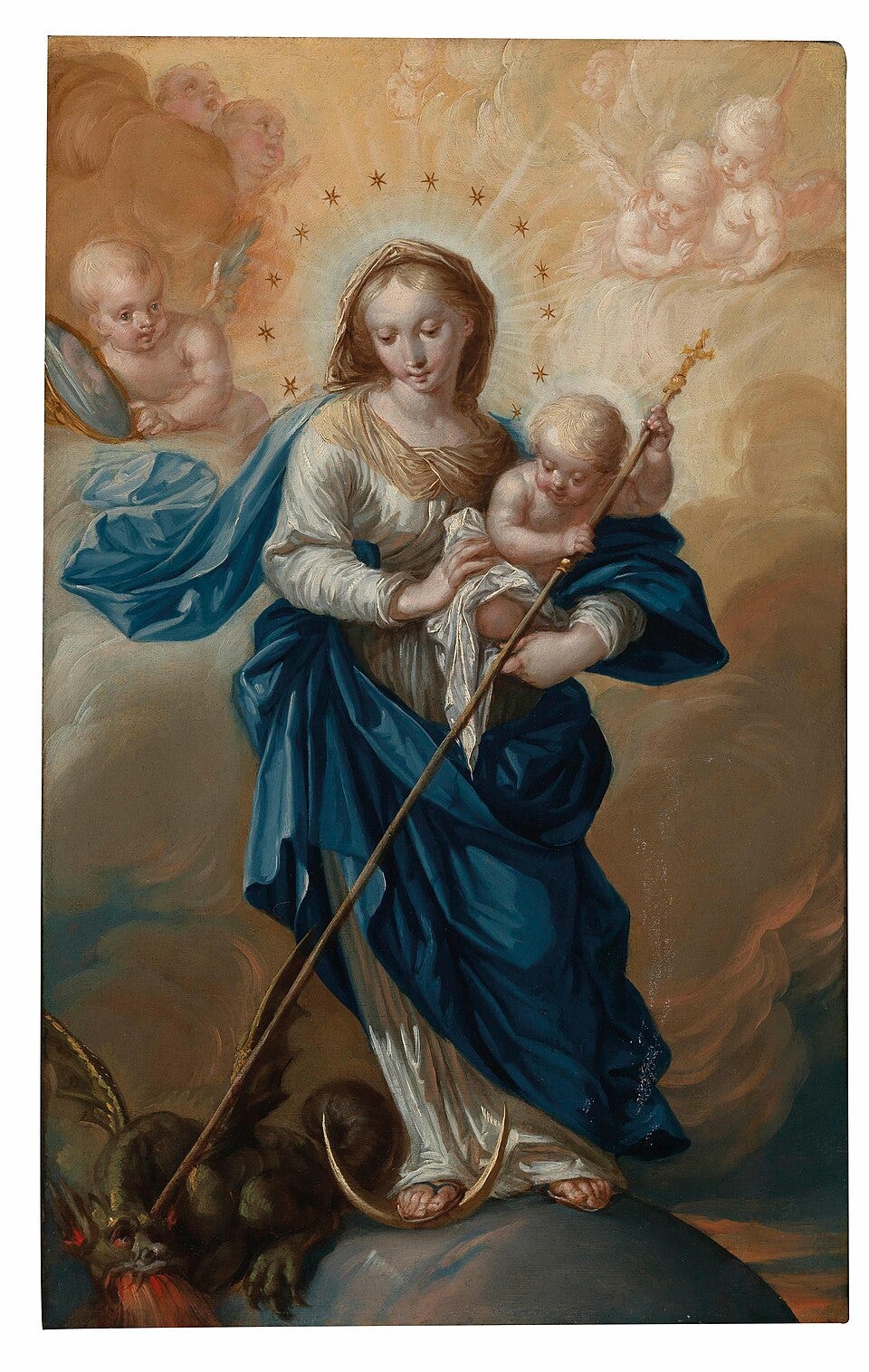
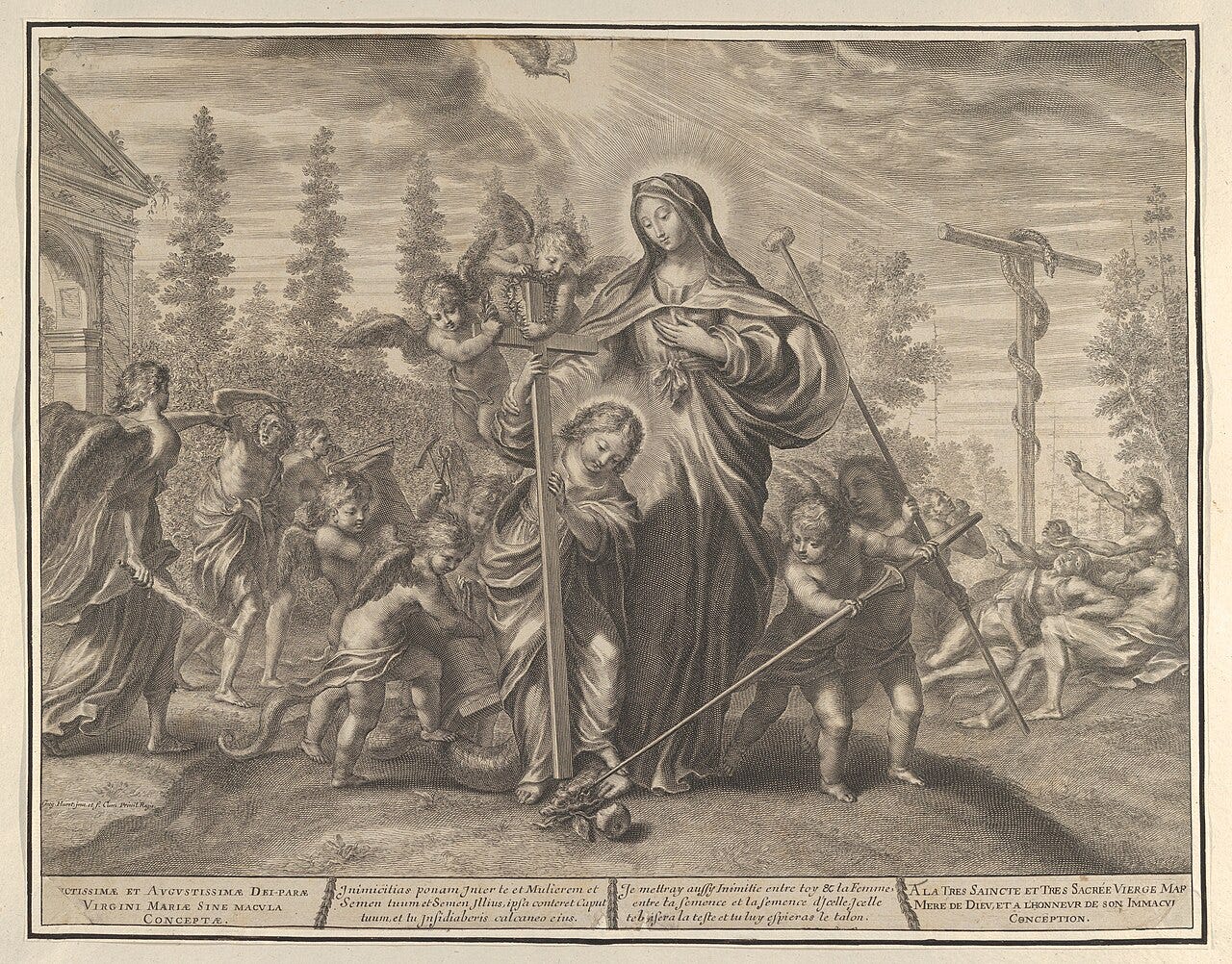
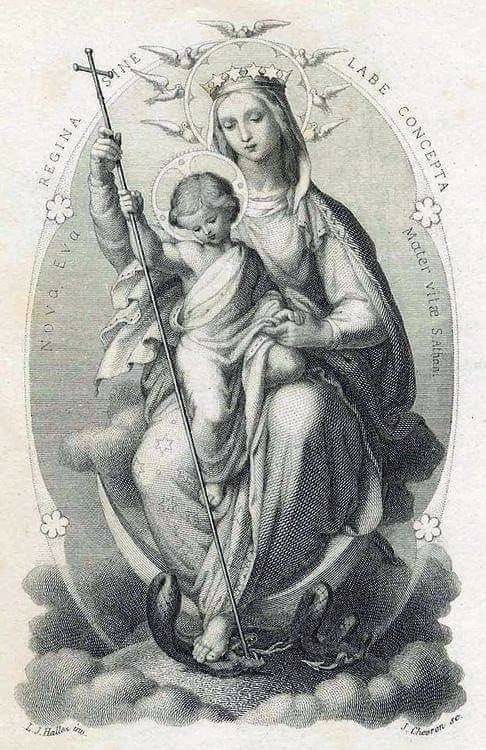
In earlier posts, we saw how Baroque artists combined the separate subjects of the Immaculate Conception and the Madonna and Child into a uniquely expressive form in order to portray the decisive power Mary received through her Divine Son to conquer the devil. This form which goes by the name of Inmaculada Romana or Inmaculada Franciscana depicts a victorious Virgin, usually with the Child Jesus, spearing the serpent who cannot do ought but writhe in her presence. In this post we will explore seven geographical variations of this style, and in a future one (likely to be the last in the series) we will focus on a similar subject employing different motifs. All articles of this series are now collected in the publication section “Immaculate Conception in Art.”


Rome
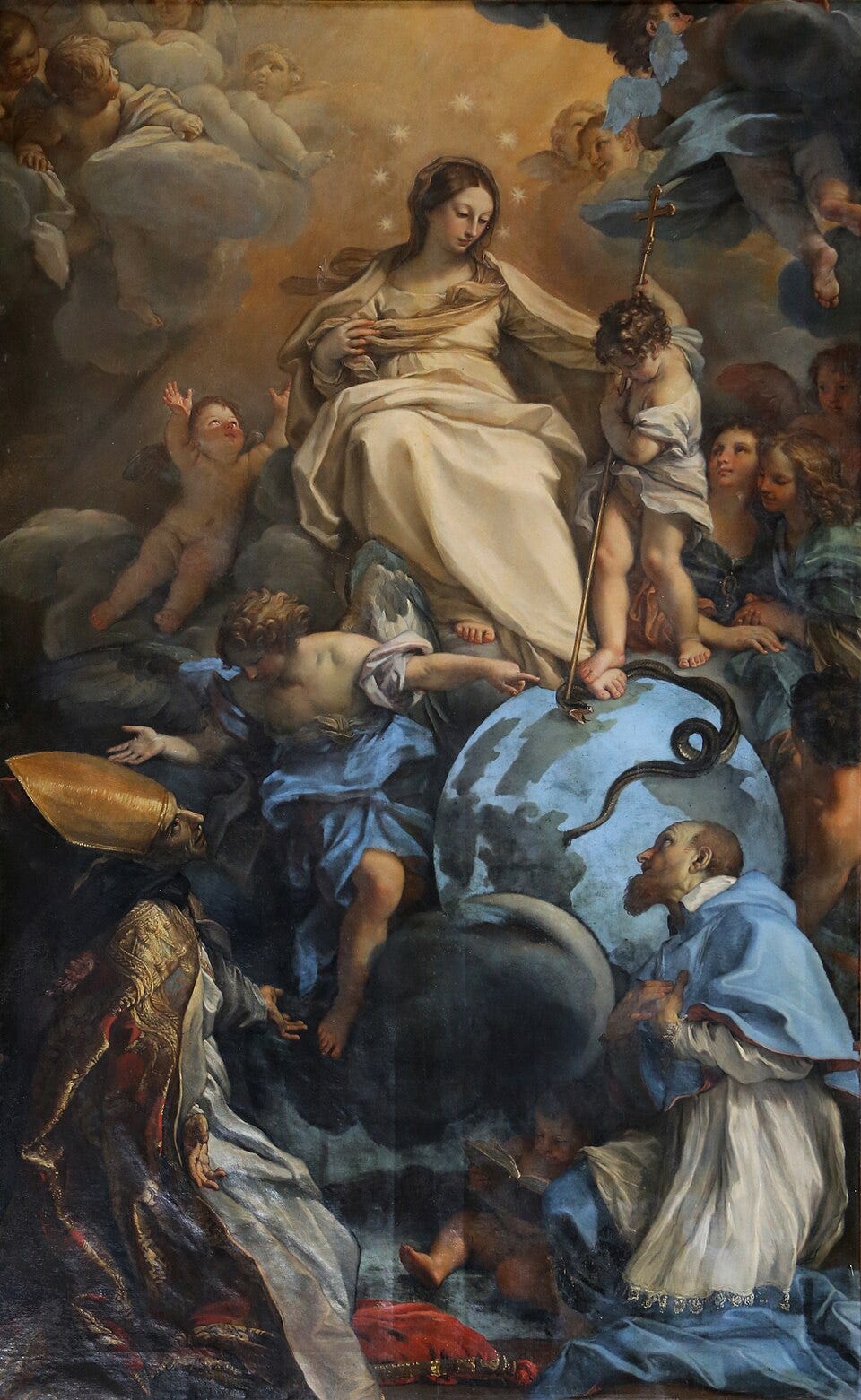
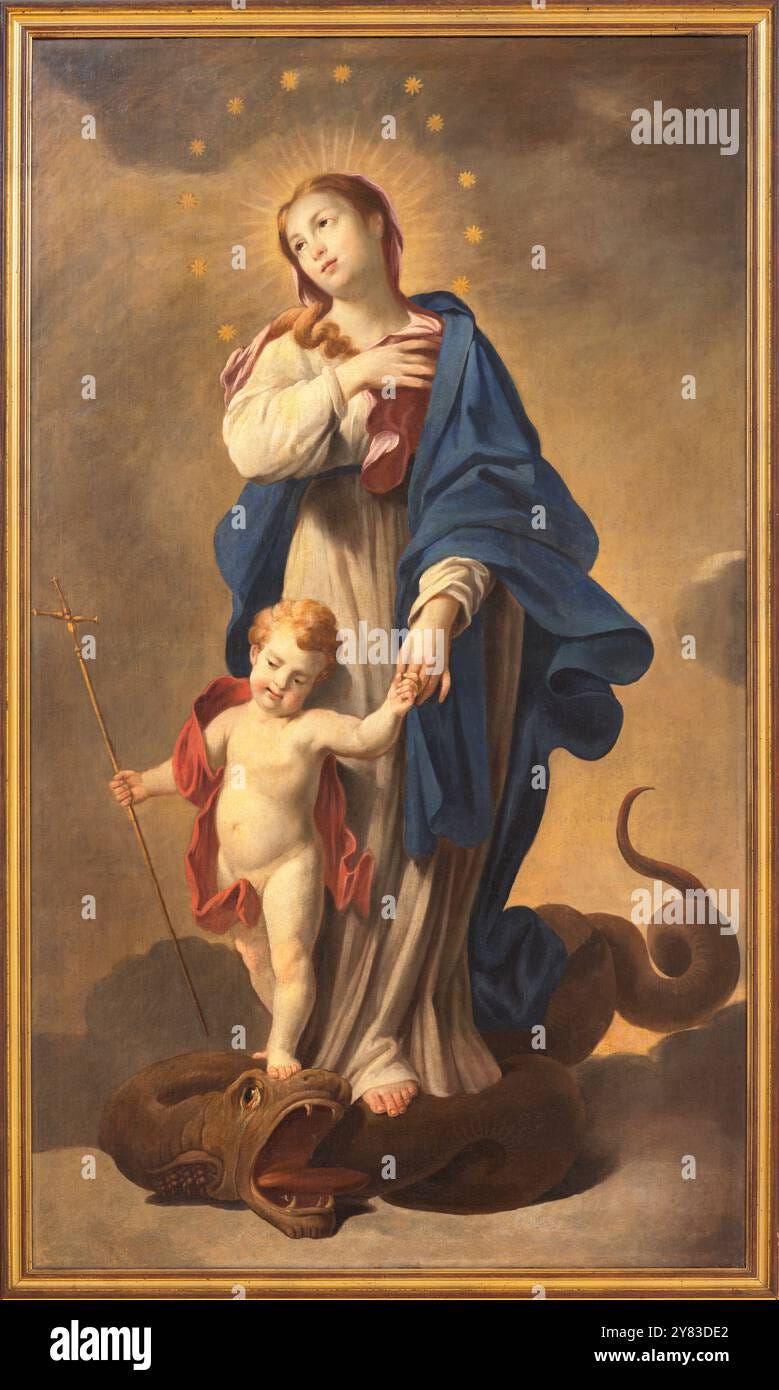
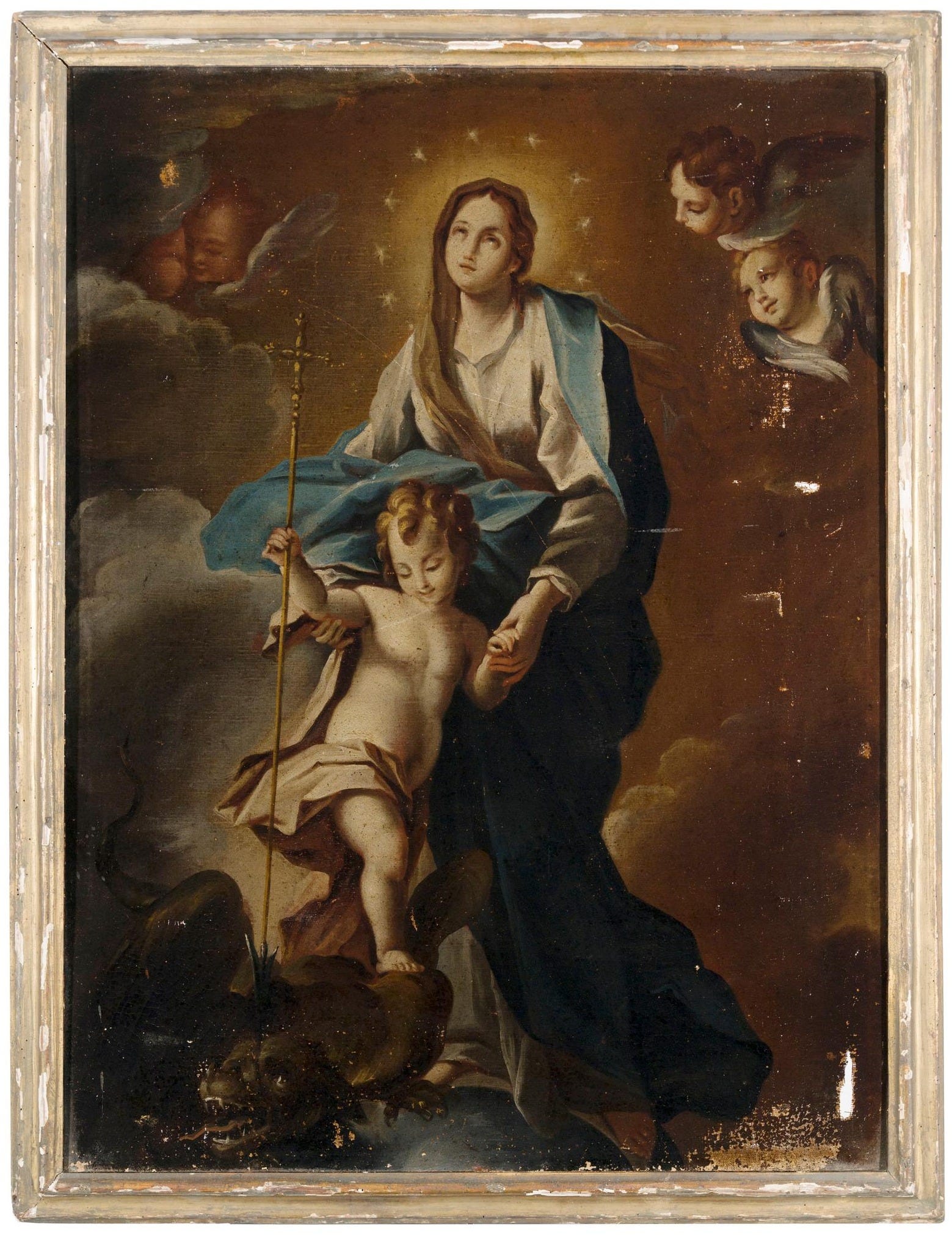
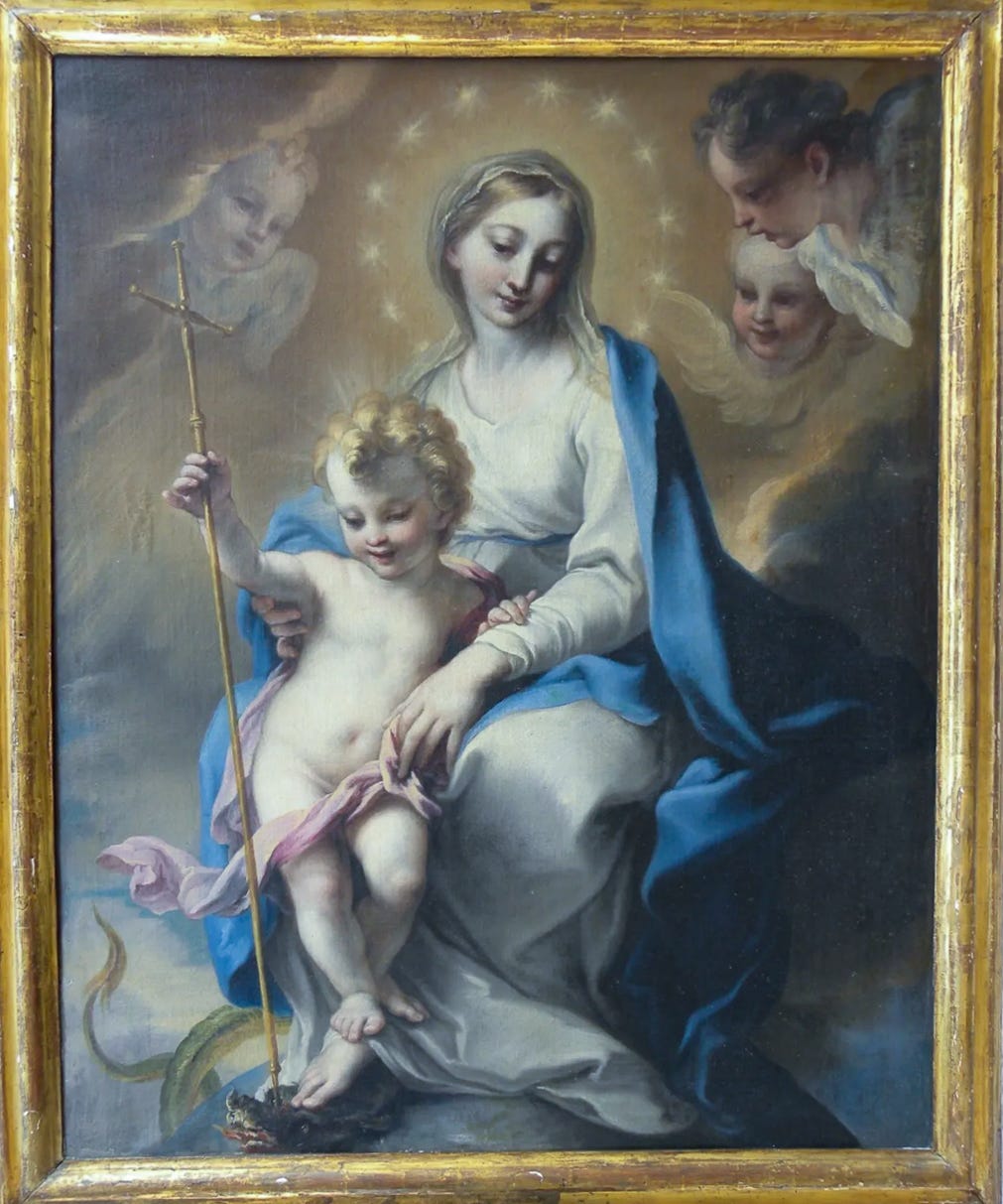
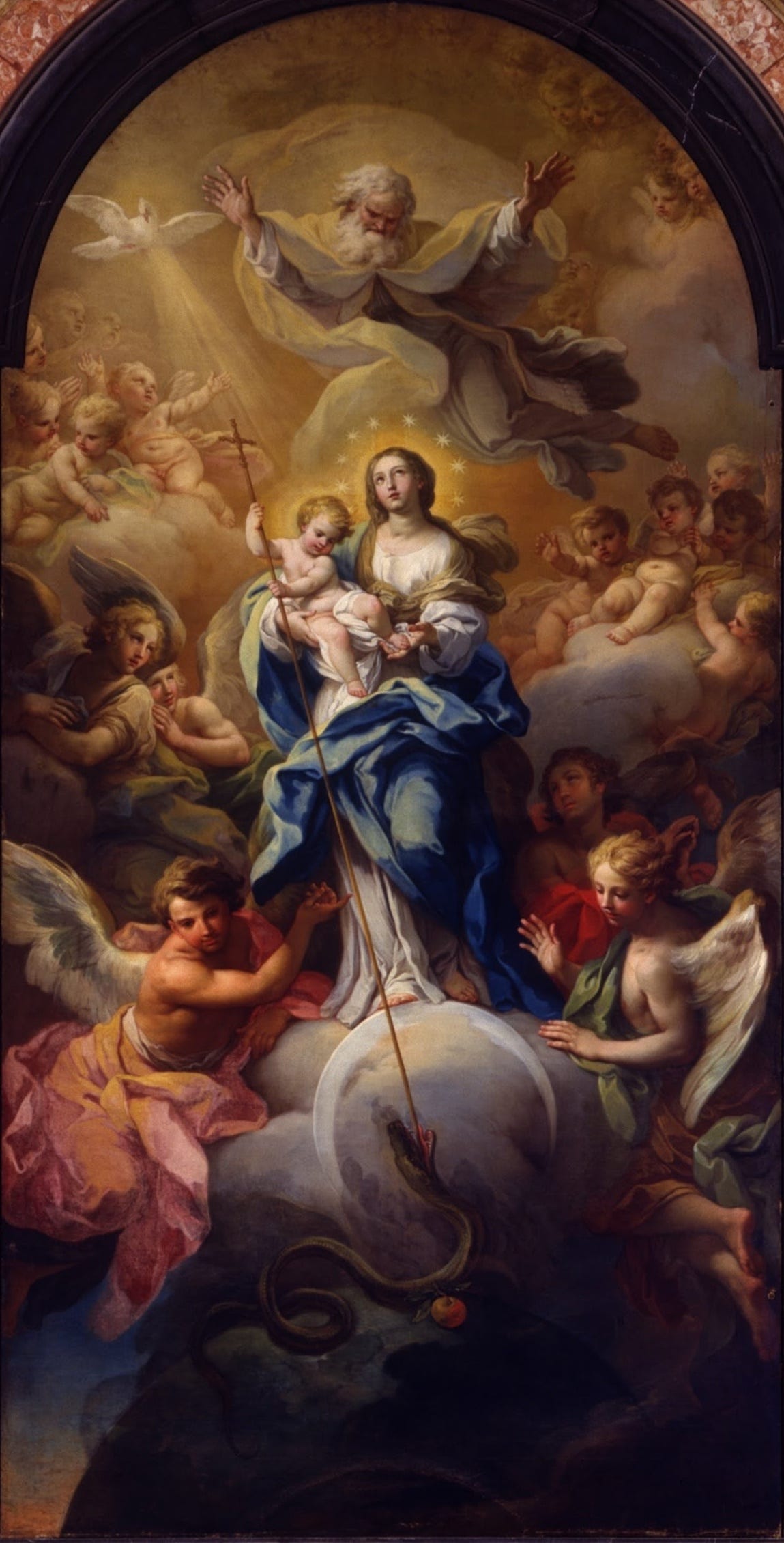
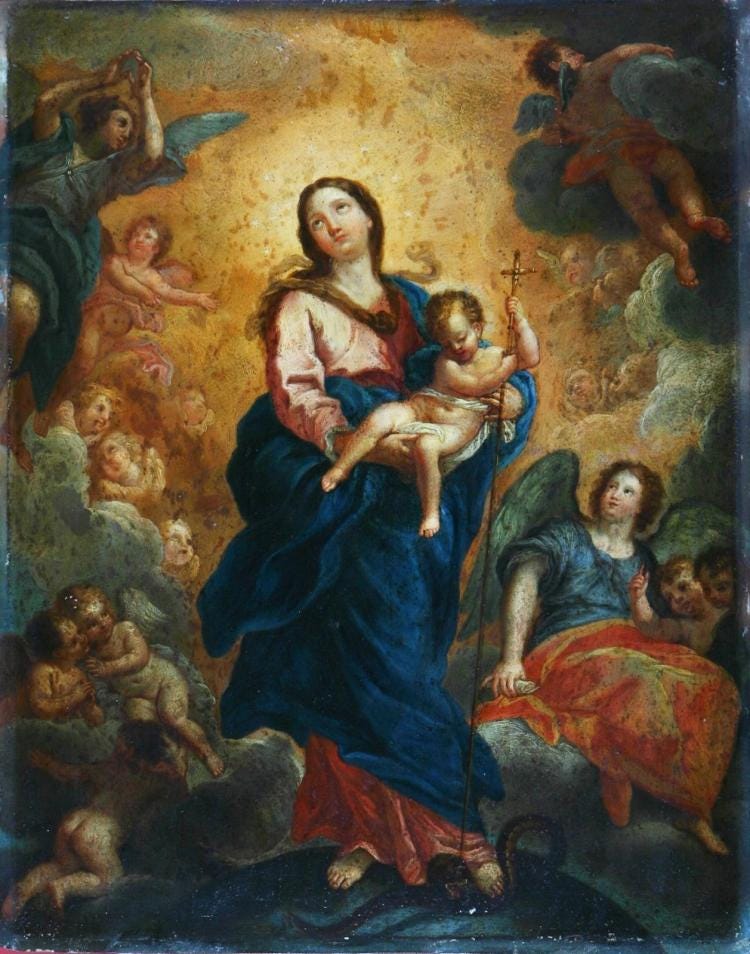
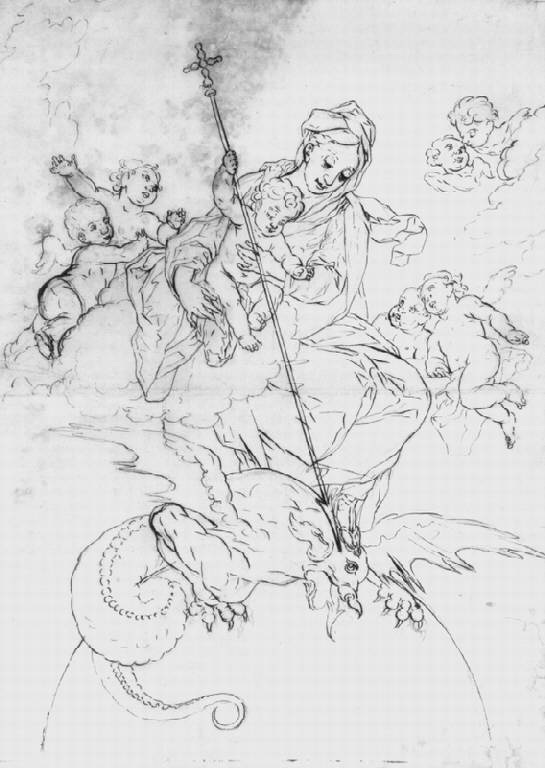
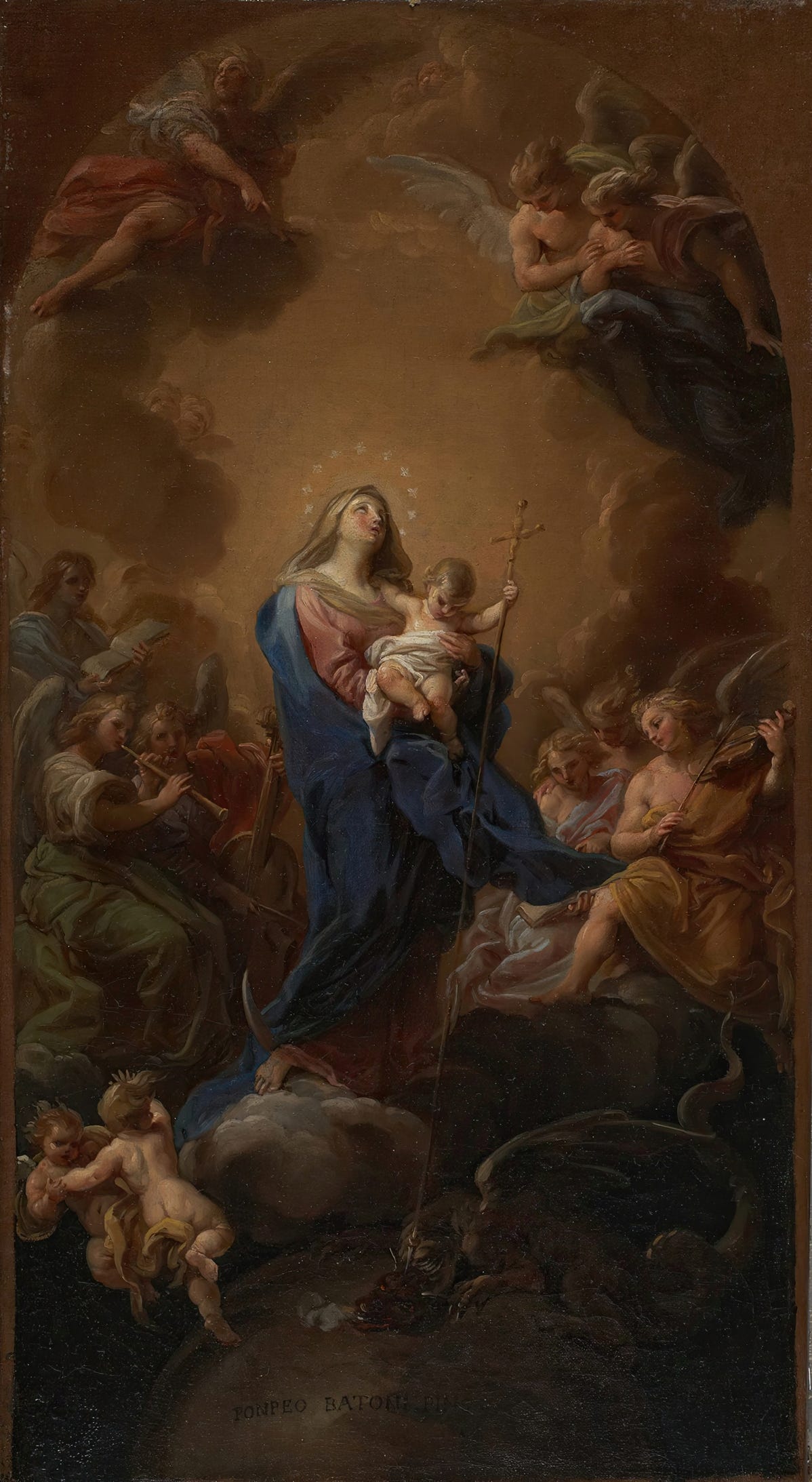
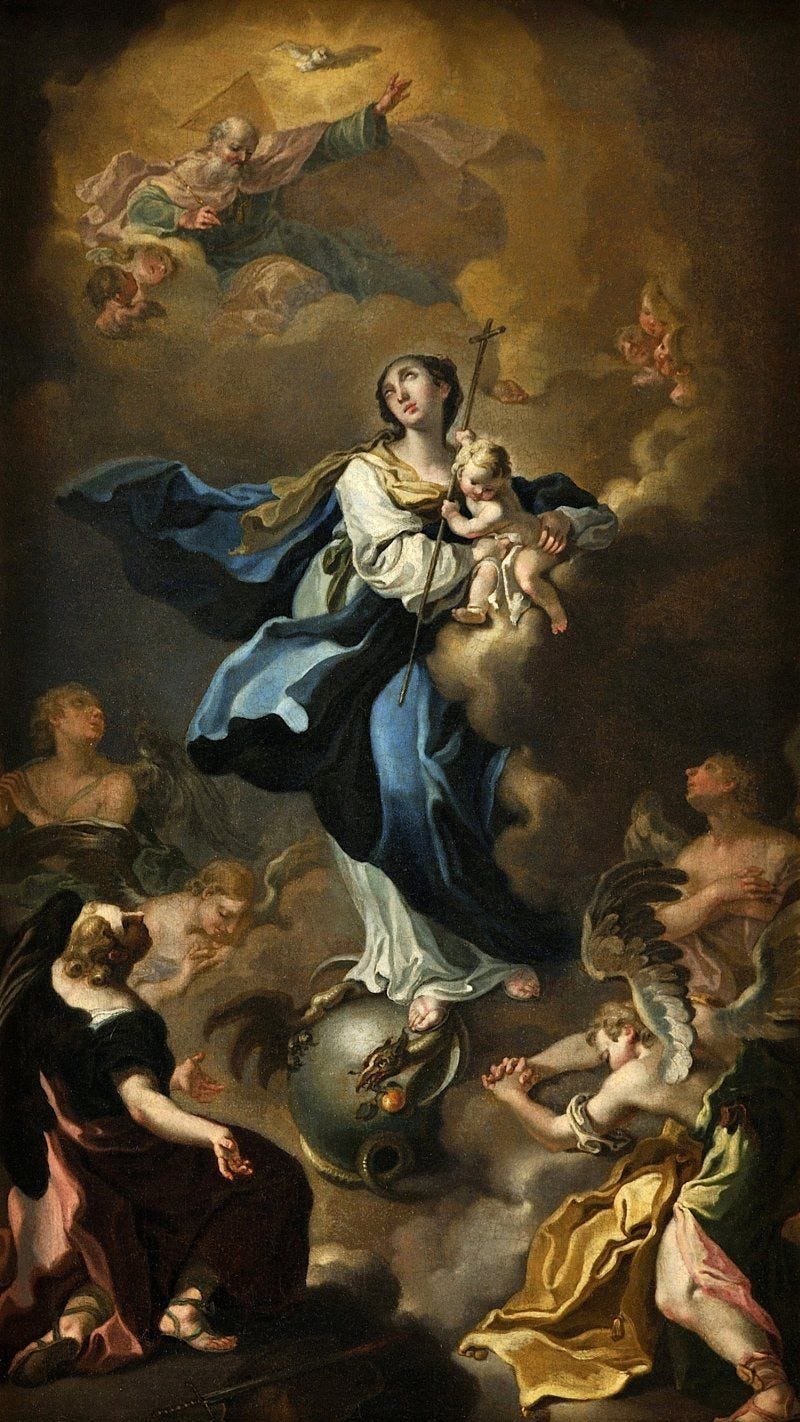
As detailed in the previous installment, the probable originator of the Inmaculada Romana was the Roman painter Carlo Maratta as the earliest depictions were painted by either him or his students. It was definitely a favorite of his, also being employed as an element in other commissions. Various Roman artists were inspired to imitate his style, leading to its popularization.

North of Rome
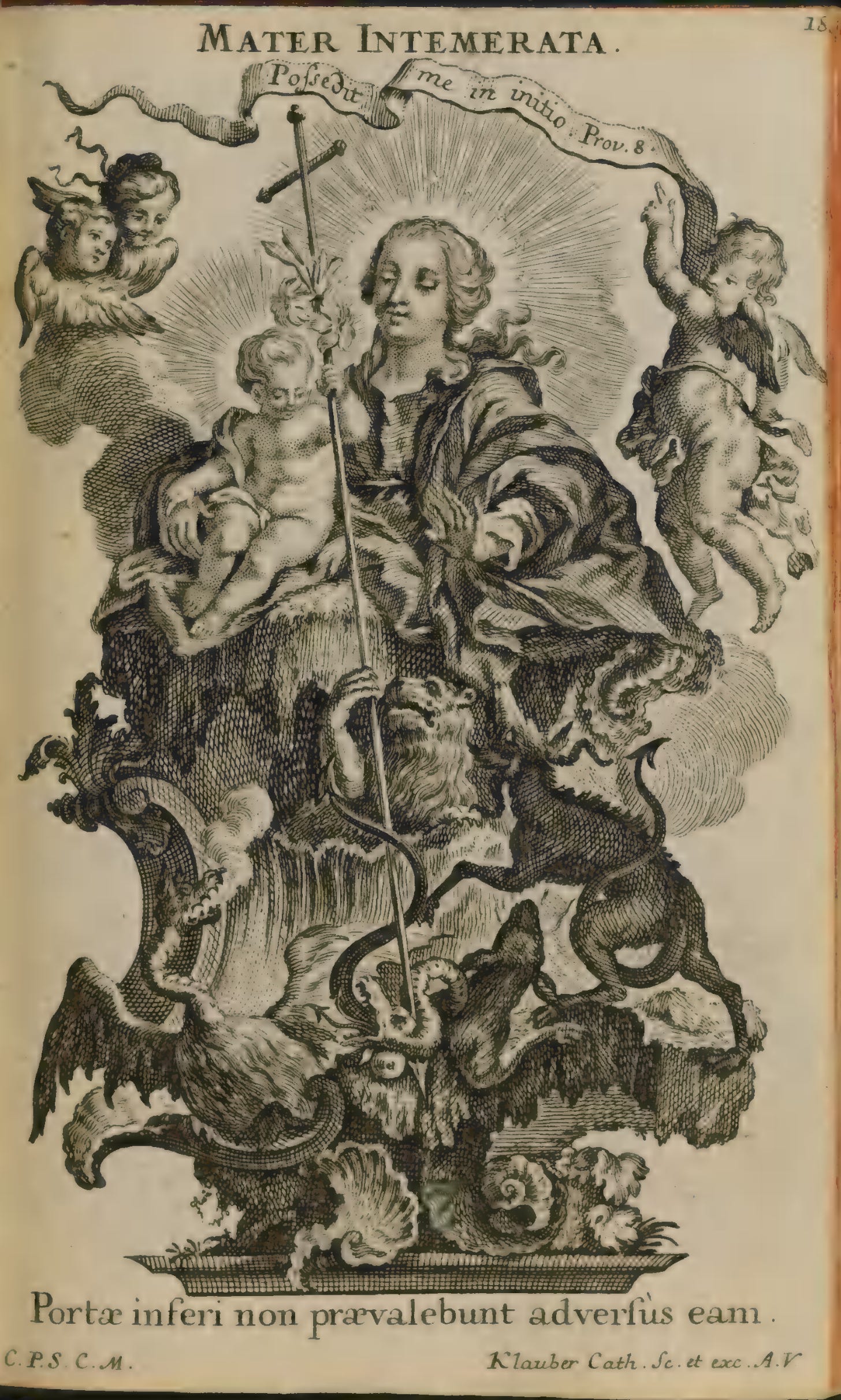
Upon entering Western Europe the Germans take up the mantle of furthering this subject, with some help later on by the French. The skilled engraver Johann Baptist Klauber in his Litaniæ Lauretanæ ad Beatæ Virginis (“Litany of Loreto to the Blessed Virgin”) utilizes the Inmaculada Romana in his plate for Mater Intemerata (“Mother Undefiled”), coupling it with the following verse from Scripture:
Portæ inferi non prævalebunt adversus eam.
The gates of hell shall not prevail against it.—Matthew xvi. 18.


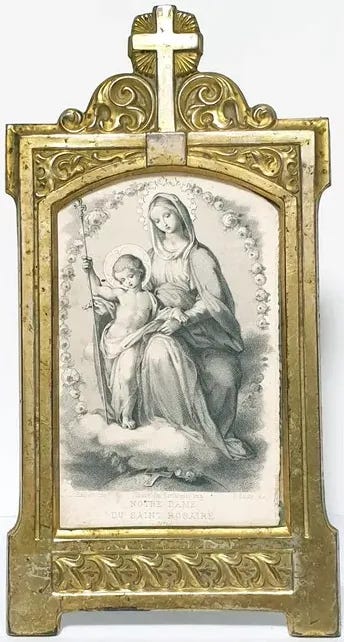
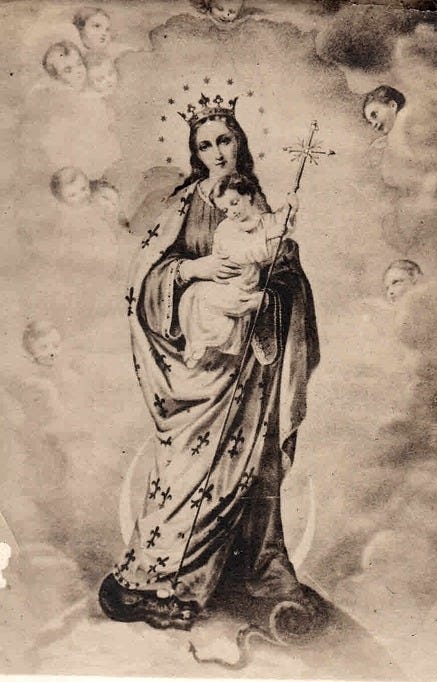
East of Rome
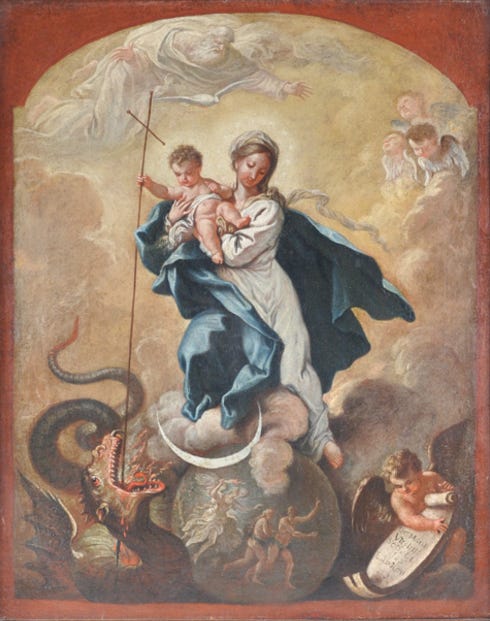
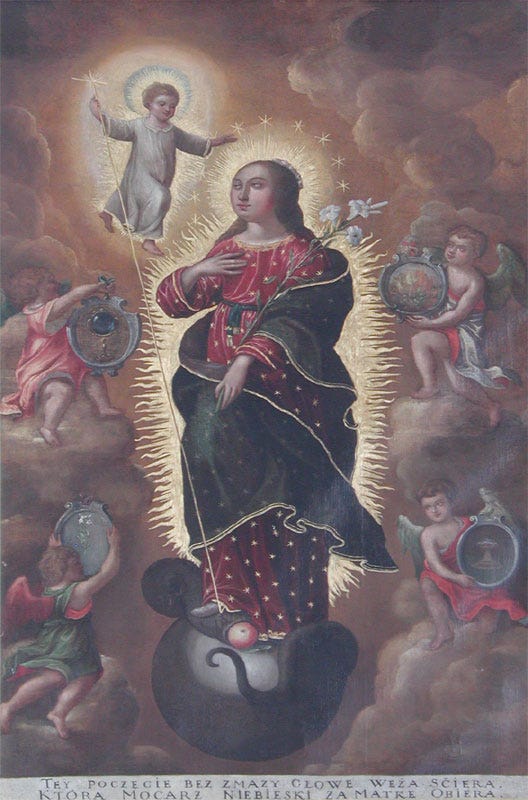
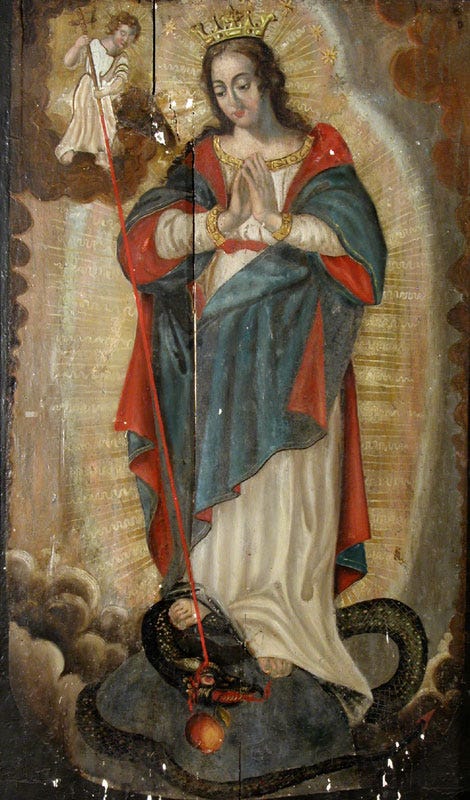
Paintings in Eastern Europe pay a heavy homage to the Maratta originals, while its sculptures and icons demonstrate a Flemish influence (to be detailed later).
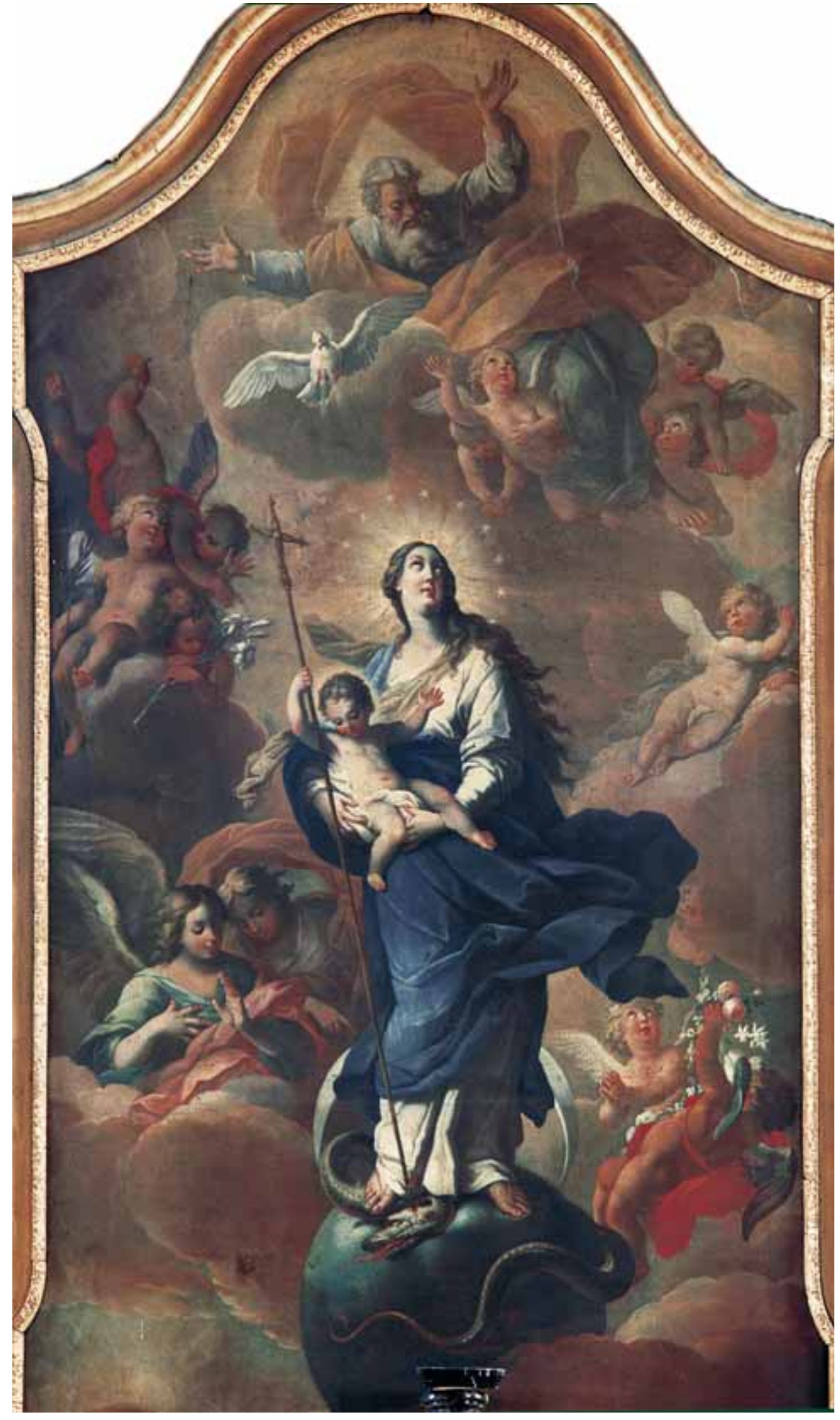
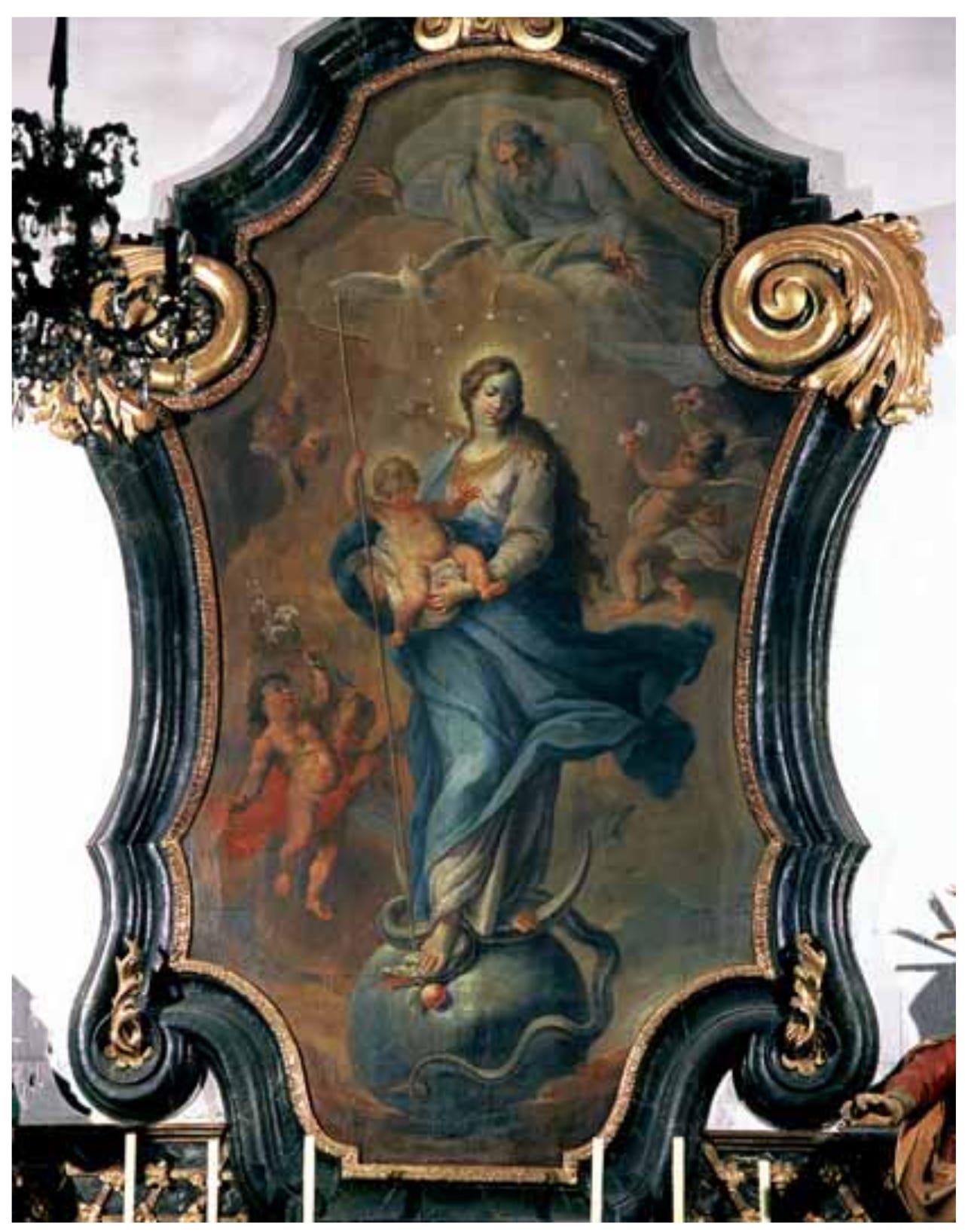
.jpg)



England
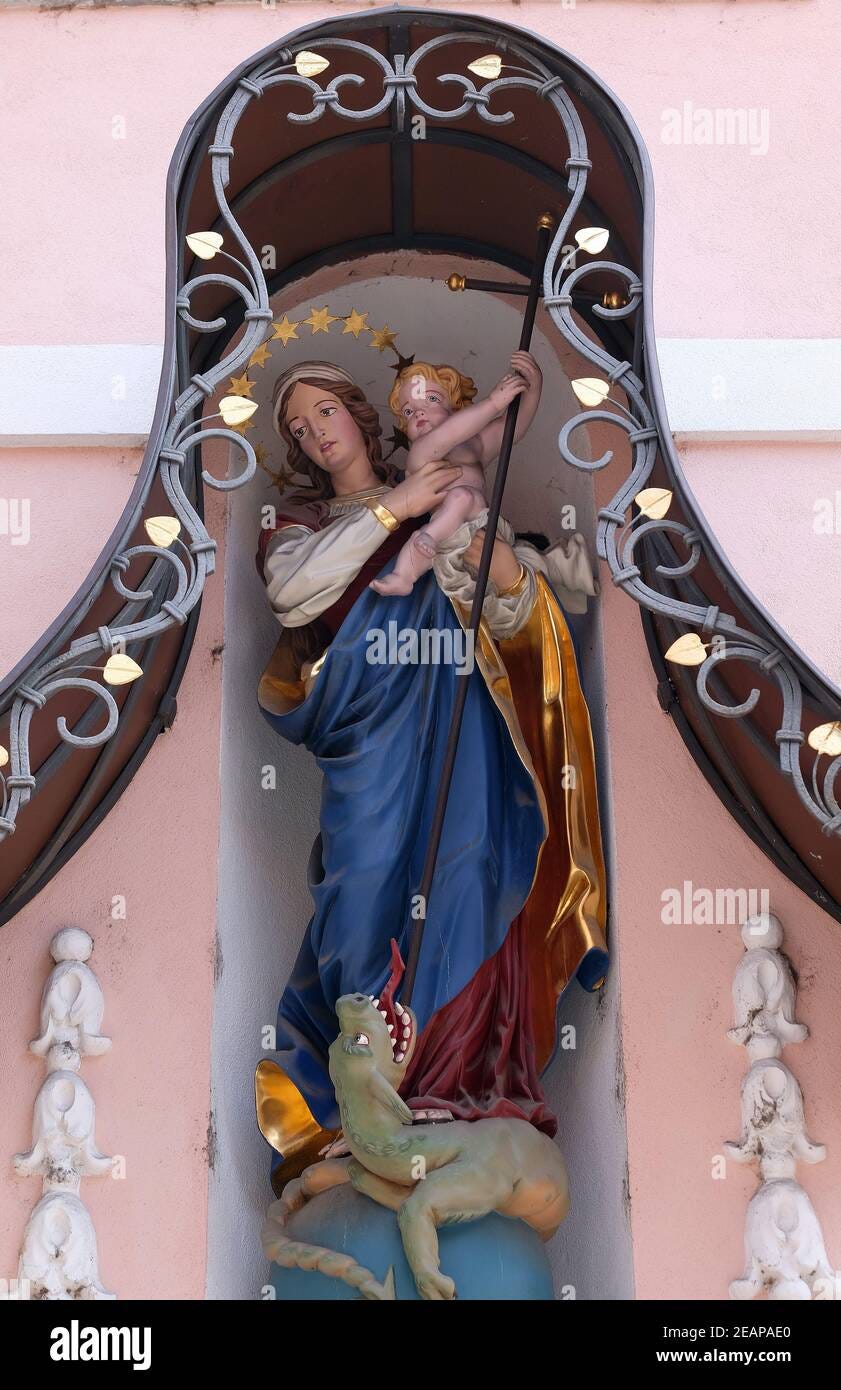
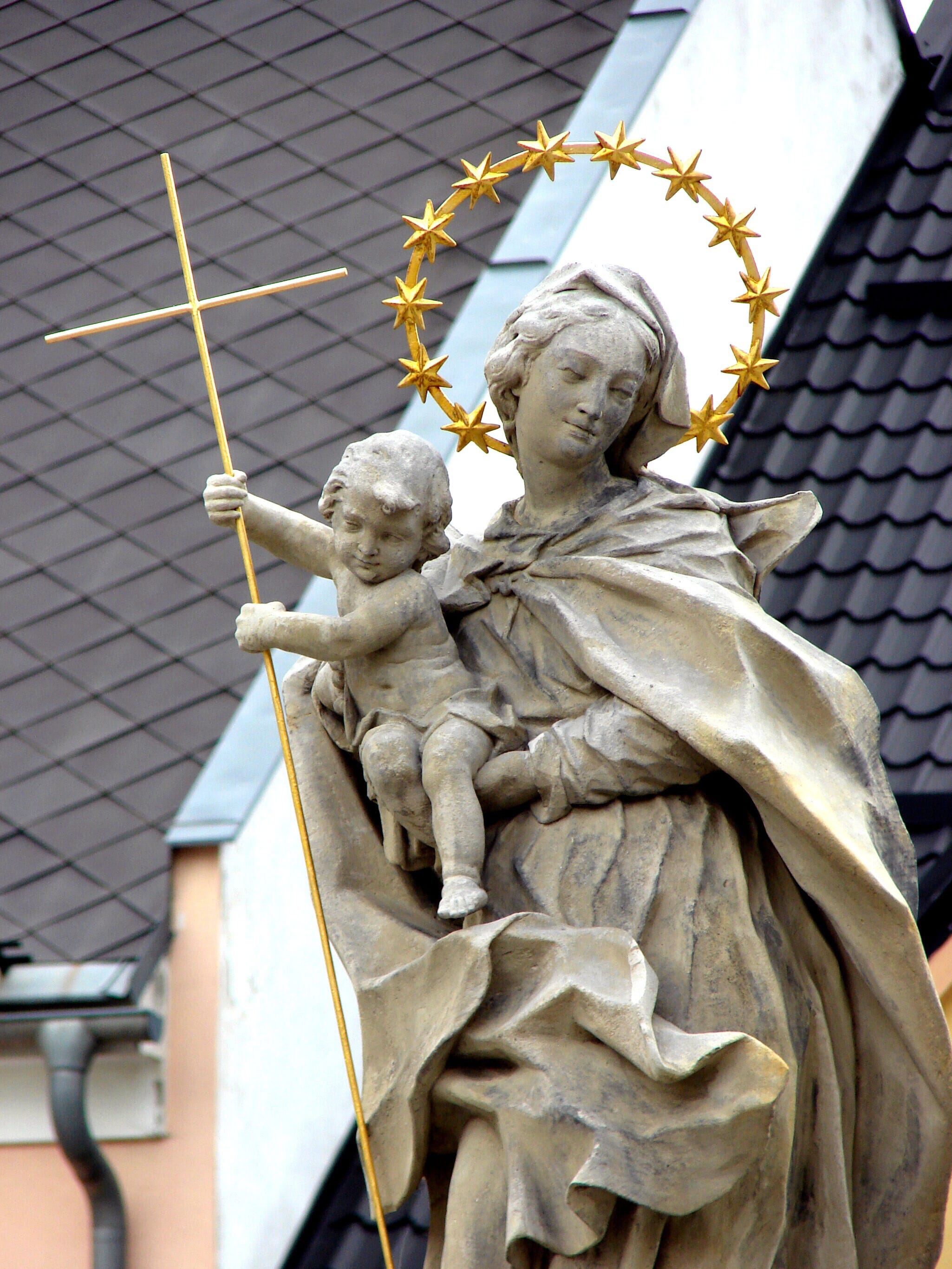
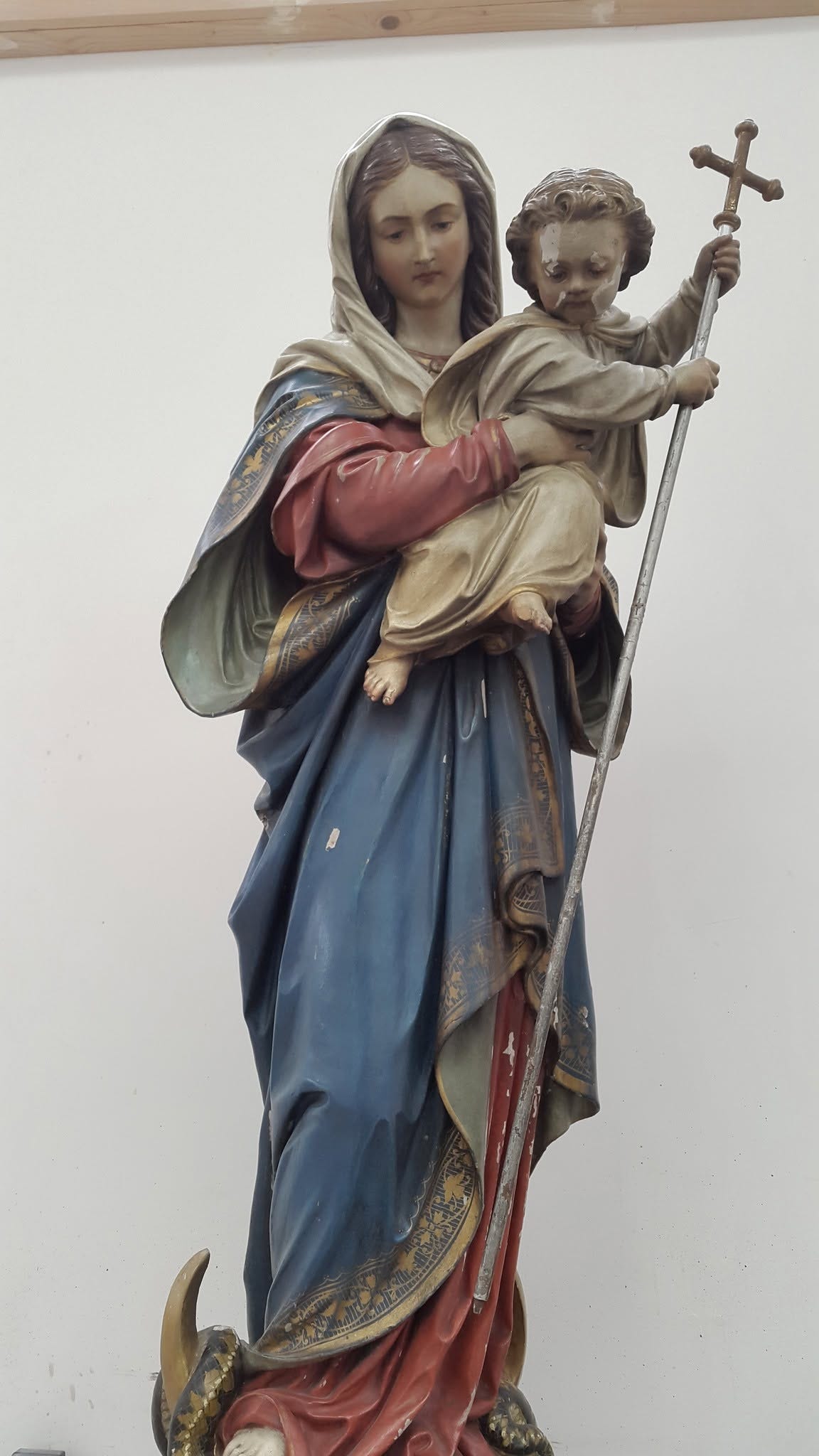
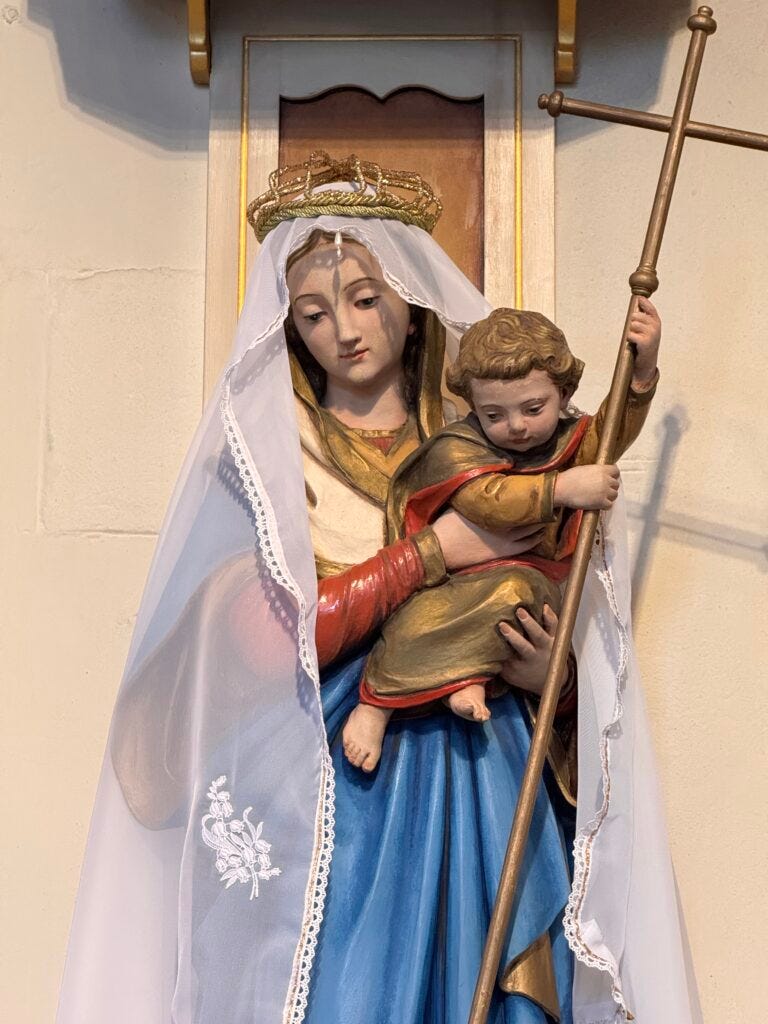
Here is as good a place as any to showcase two unexpected finds across the English Channel. The first statue is housed in the SSPX Church of Saints Peter & Paul in Liverpool, and the second statue is at the Anglican Parish of All Saints’ in Benhilton. As there is no further information nor native examples, these appear to be recent transplants from the Mainland.
Spain
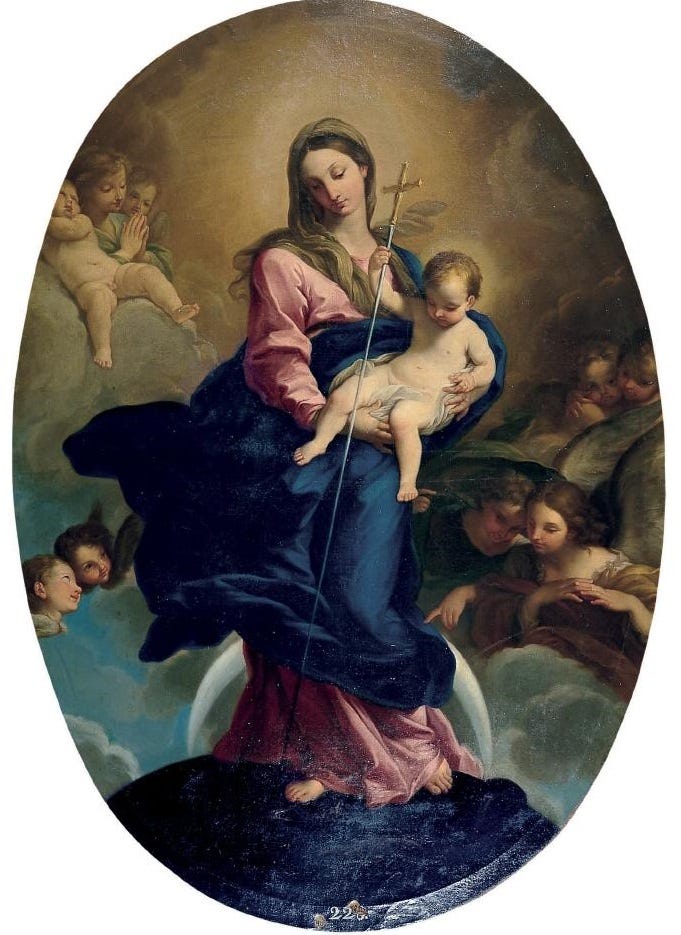
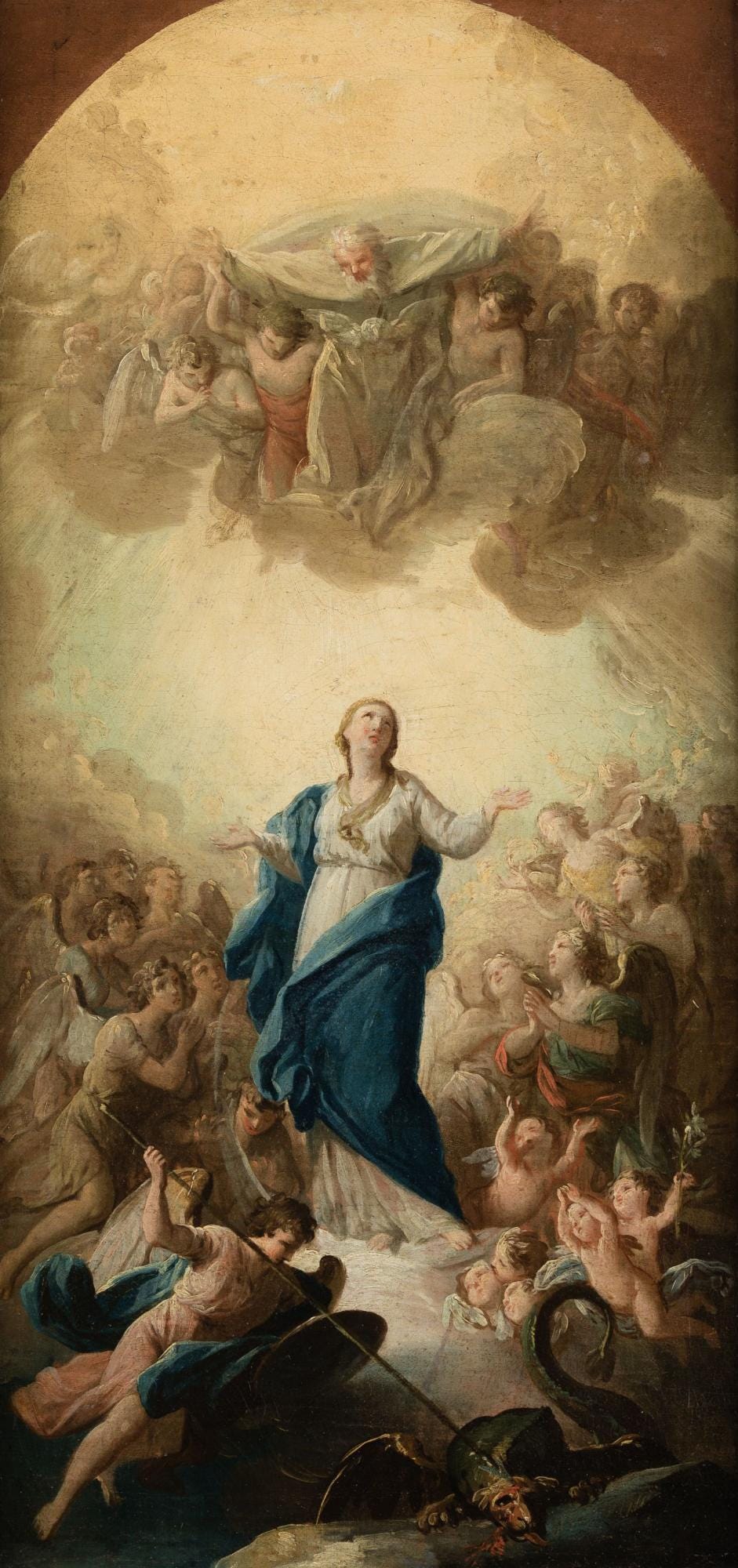
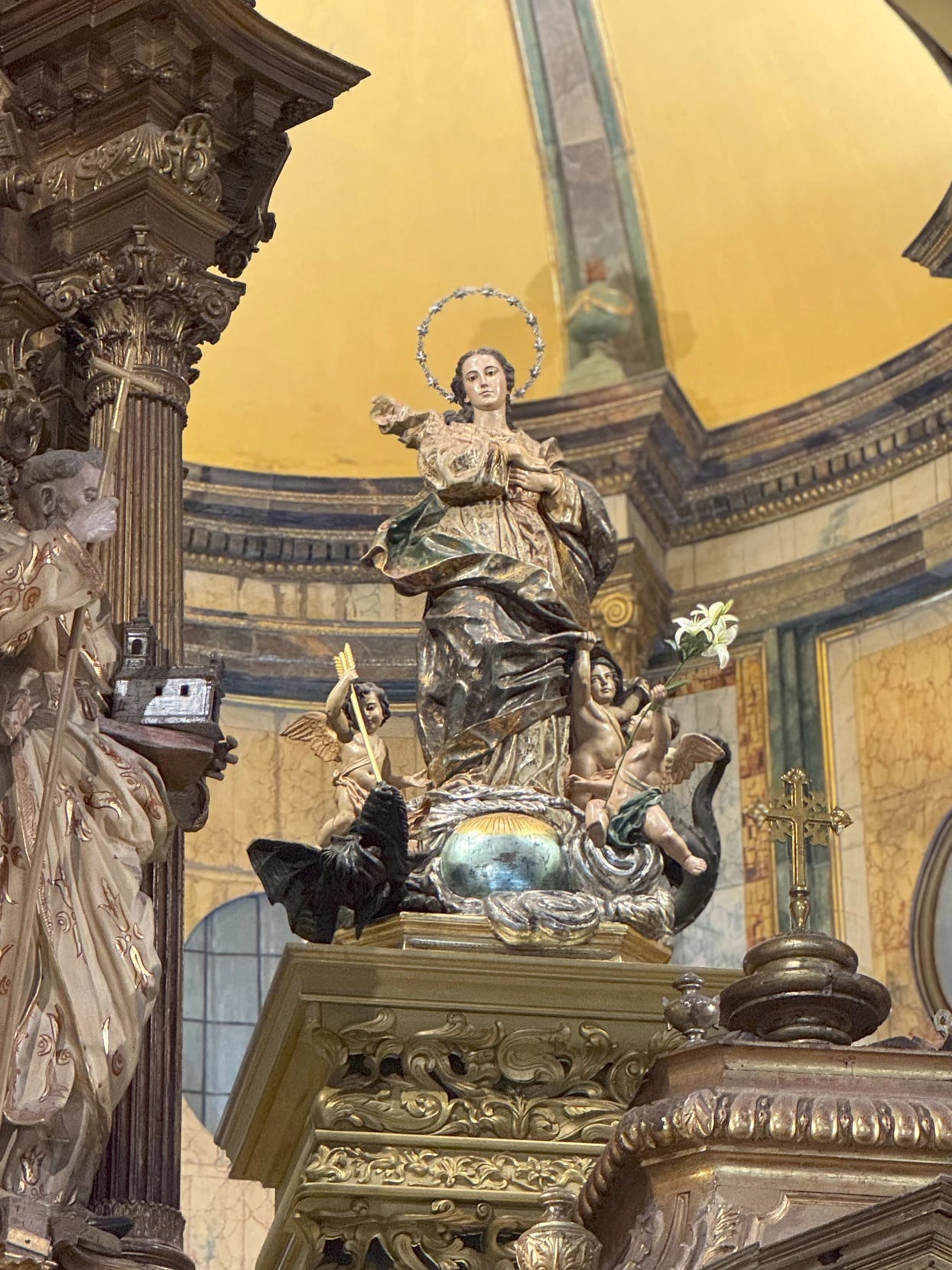
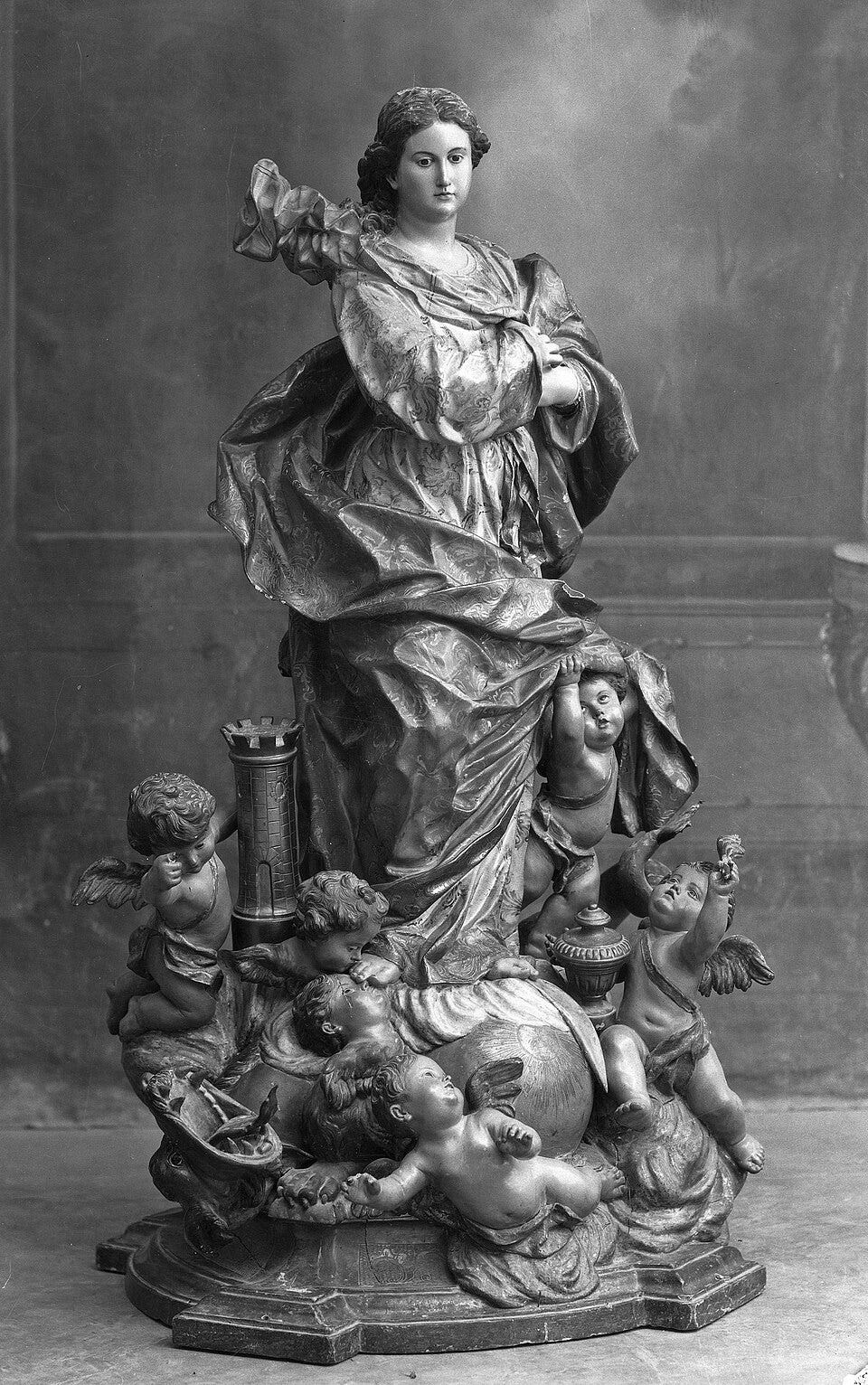
The Hispanic take on this subject, promoted by Franciscans at home and abroad, was characteristically more experimental and gave rise to the additional title of Inmaculada Franciscana. In Spanish art we are more likely to see unconventional attributes like angels spearing the serpent and callbacks to the Tota Pulchra subject, where the Immaculate Conception had its start.
.jpg)
West of Spain
In the New World, creative freedom flourished as artists took examples from Europe more as springboards than as templates. The American approach seemed to have an aversion to “whitespace,” opting for as much symbolic ornamentality as could be fit into a work.
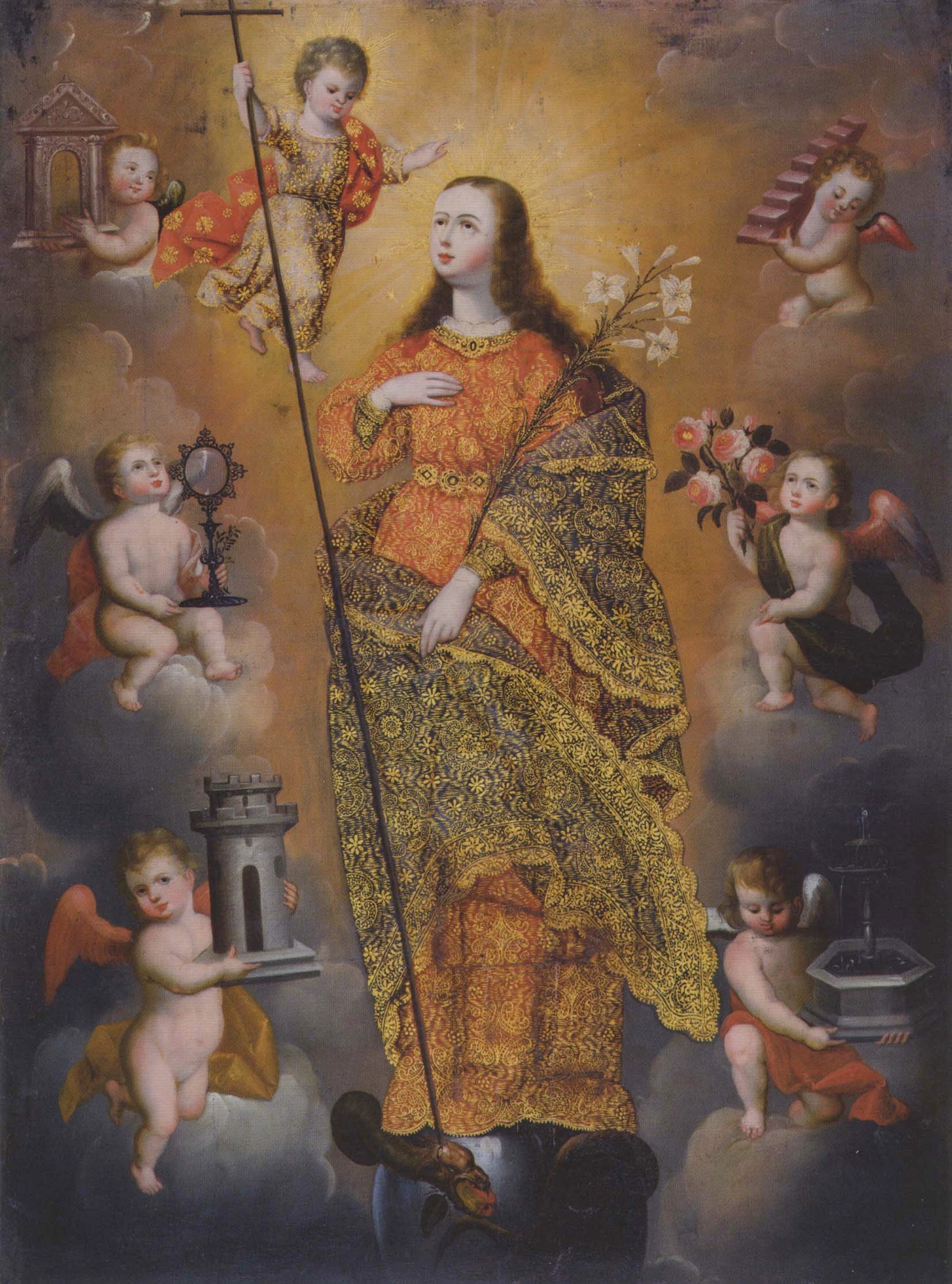
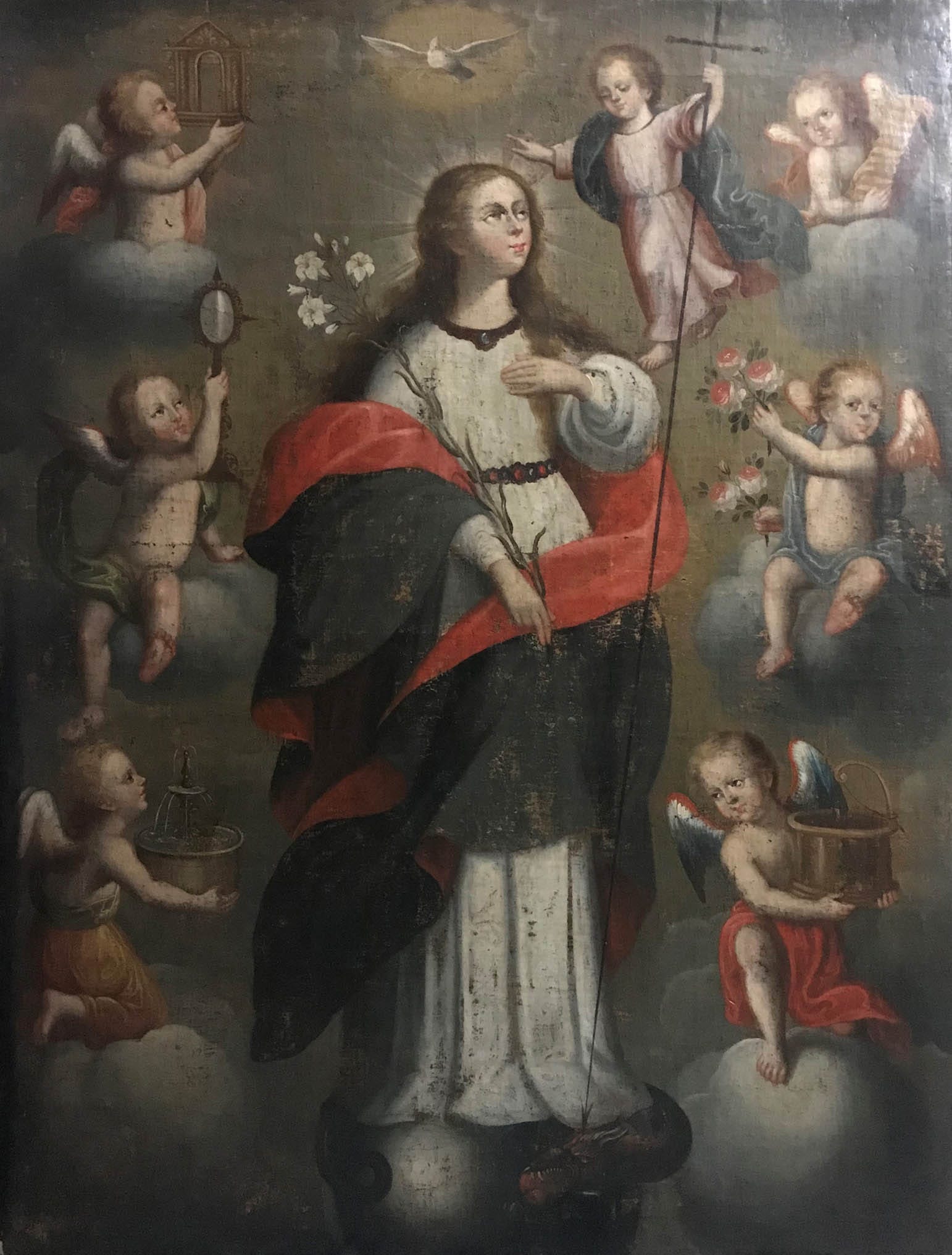
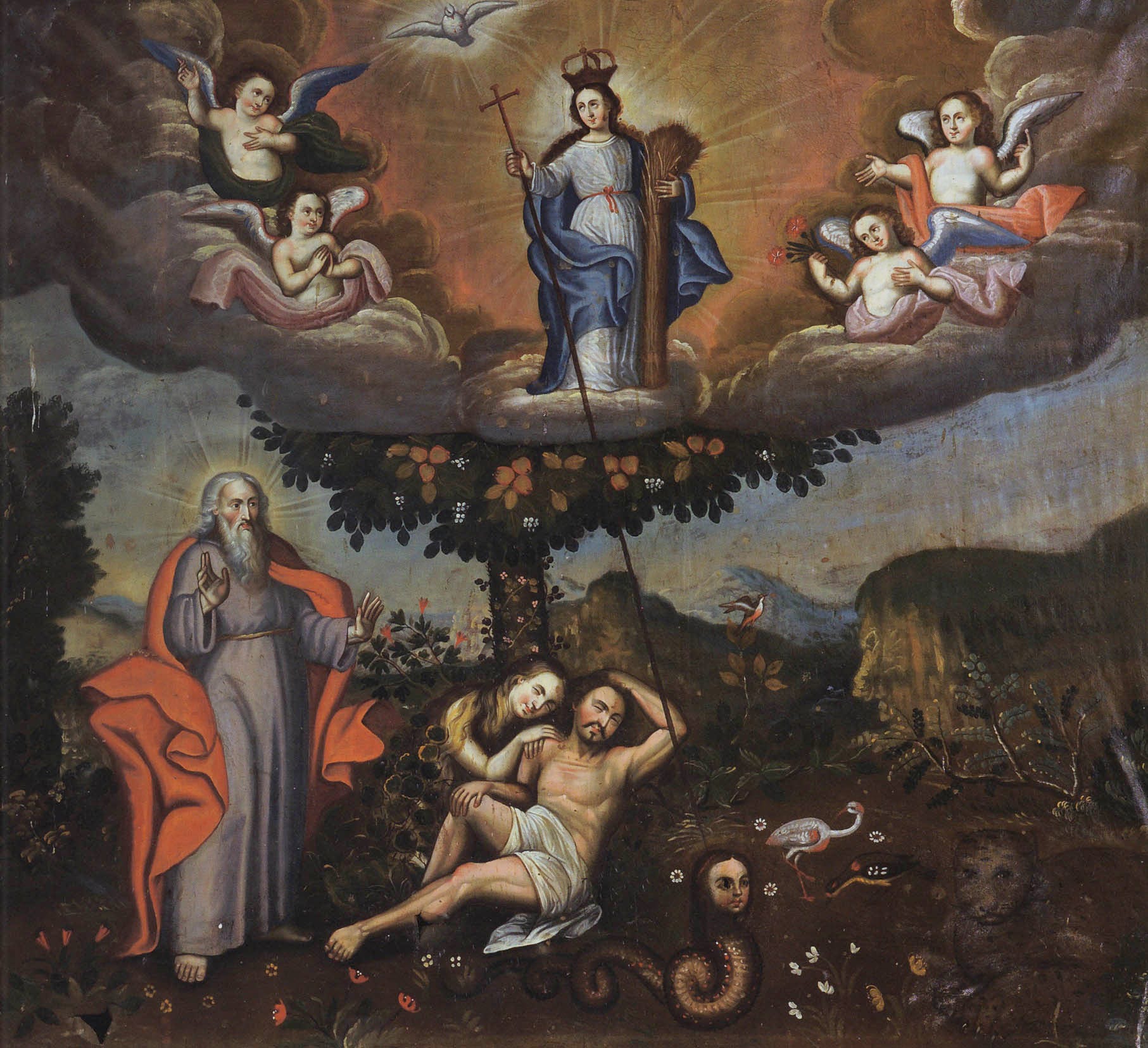
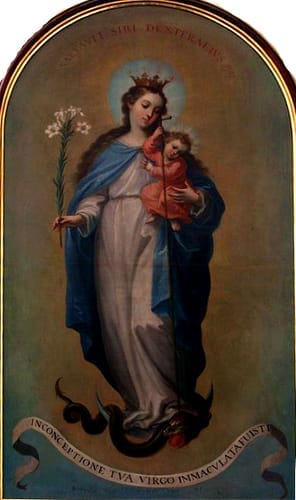
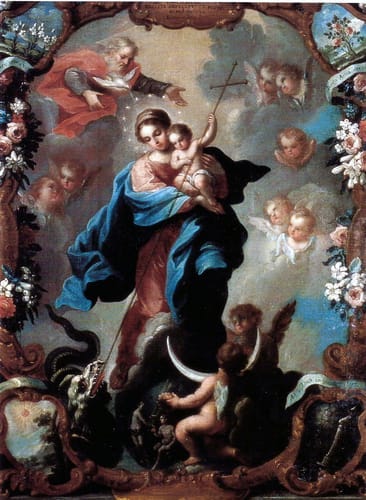
East of Spain
In Brussels, Belgium, the former capital of the Spanish Netherlands, the Cathedral of St. Michael and St. Gudula houses a Baroque pulpit of unparalleled craftmanship, the Chaire de Vérité, the Pulpit of Truth sculpted out of oak by Hendrik Franz Verbruggen.
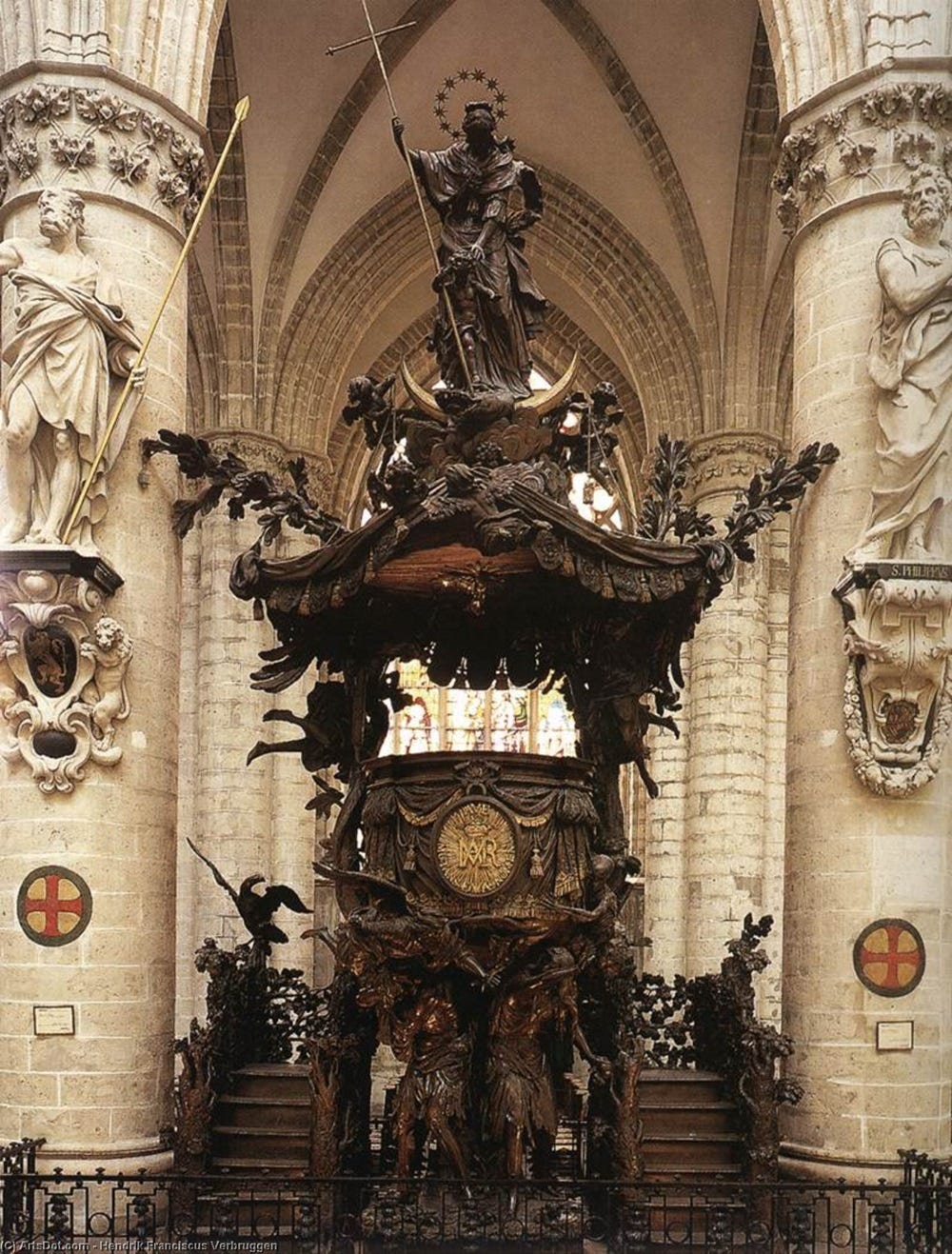
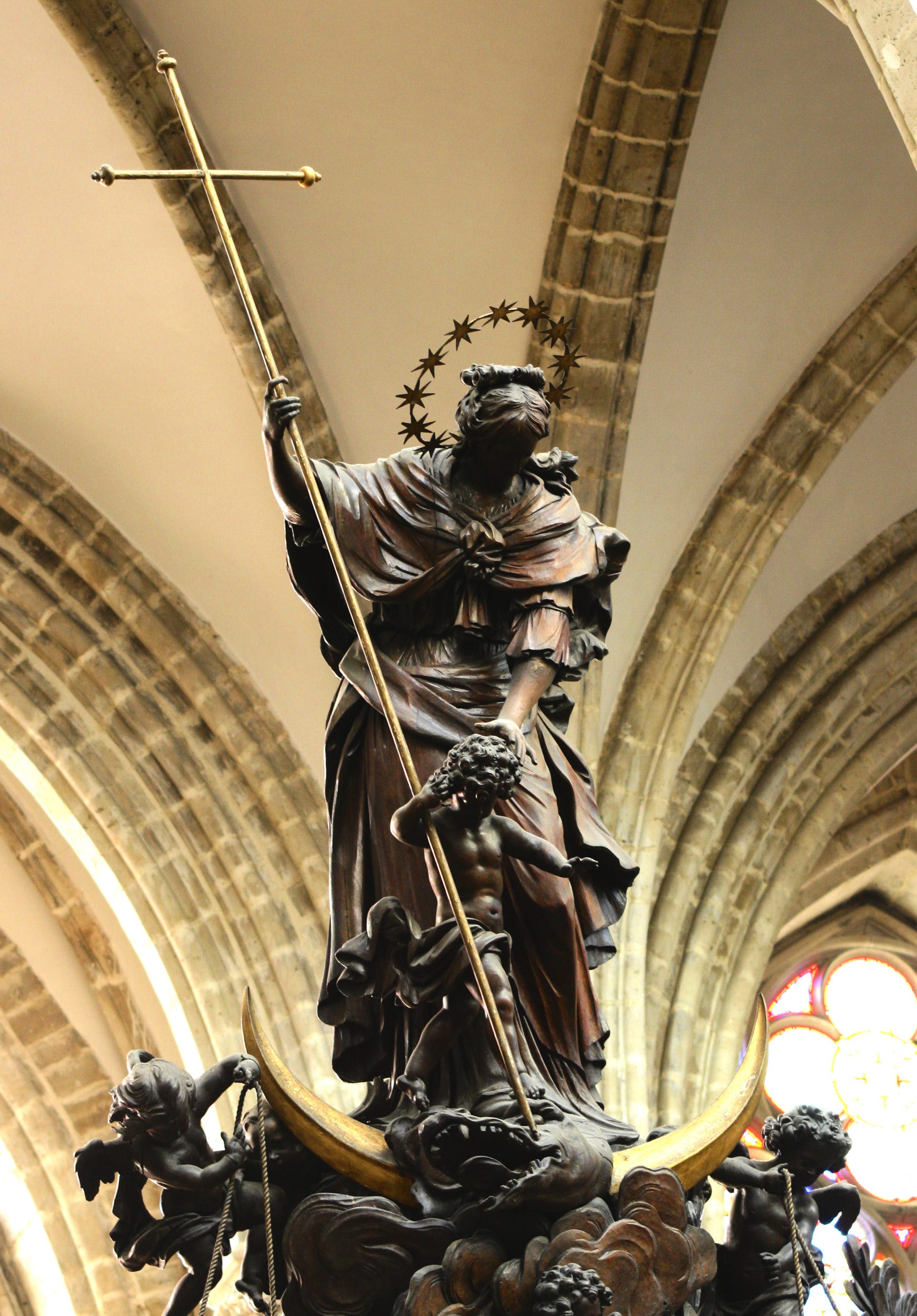
Arresting from first glance, the viewer’s eyes are directed straightaway from the detailed scene of the Expulsion from Eden at the base of the pulpit to its canopy where the beginning of our Redemption is wrought. In this superb scene, the majestic figures of Our Lord and Our Lady atop both the hideous Enemy and a crescent moon forcefully thrust the tip of a golden cross through the Dragon’s ineffectual jaws.
If it can be believed, this whole series of articles started as a way to find the proper title for what is on top of Verbruggen’s pulpit. After having said so much to this point, the image speaks for itself. What we are seeing is nothing more and nothing less than the Immaculate Conception, being also the paragon of the Inmaculada Franciscana.
It is fitting to end this journey in the Flemish region as it seems to have become over time the headquarters of this artistic movement. Not only is it centrally located relative to the other countries discussed in this post:
North of Rome, Germany and France
South of England
West of Slovenia and Belarus
East of Spain, Mexico and Peru
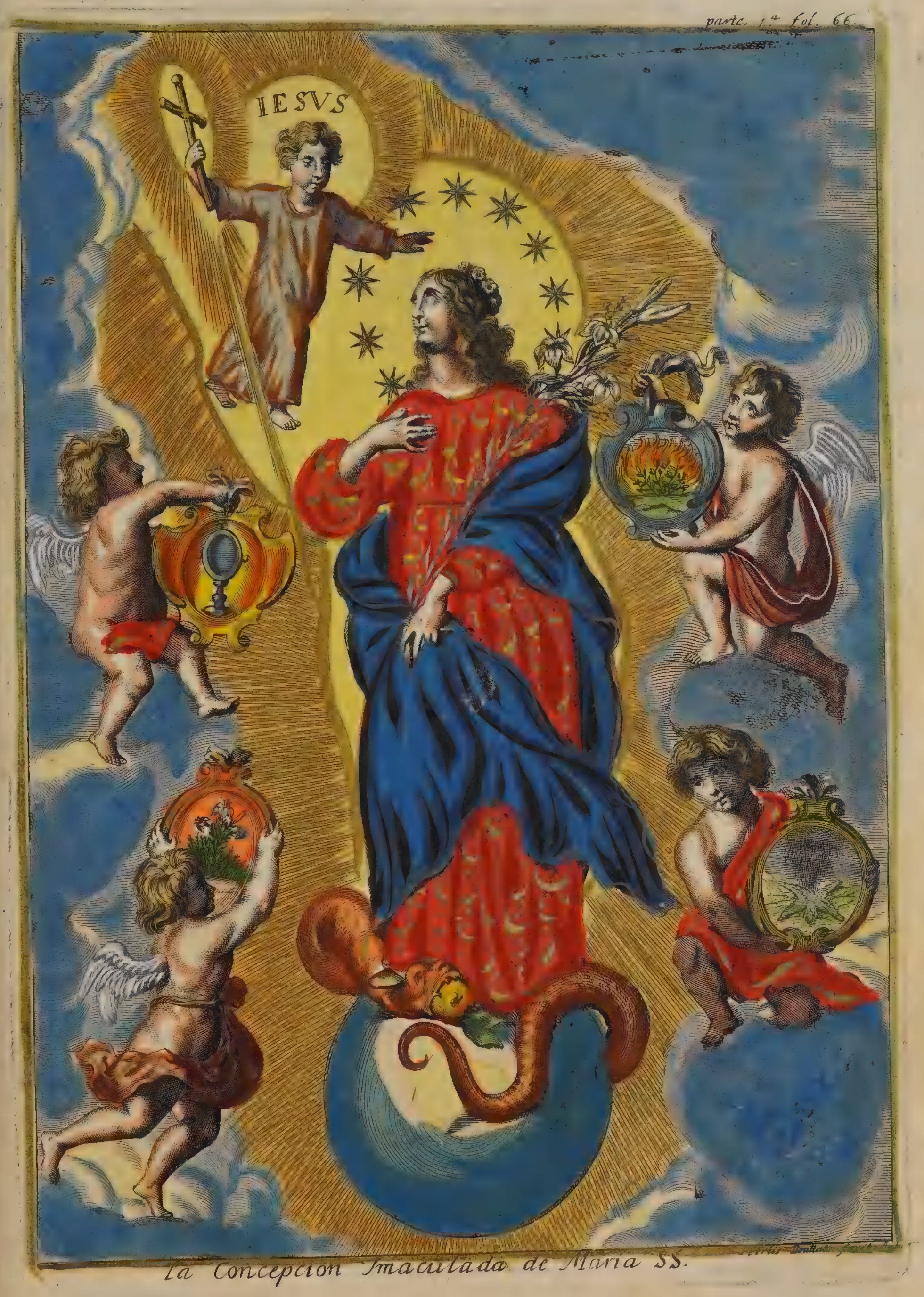
the fact also remains that Flanders had been a cultural hub since the Renaissance era. As it was a veritable melting pot of languages and art forms, barriers were low for assimilating artistic traditions from various European sources. Notwithstanding periods of political and religious upheaval, especially in the late 17th century, the subject of the Inmaculada Franciscana was able to thrive here and be communicated worldwide. A prime example of this is the print below by the Flemish engraver Peter Balthasar Bouttats, which was adapted into the Belarusian icons and Cuzco paintings we saw above.
The style persisted well into the 19th century, as can be attested to by this trio of Belgian statues.
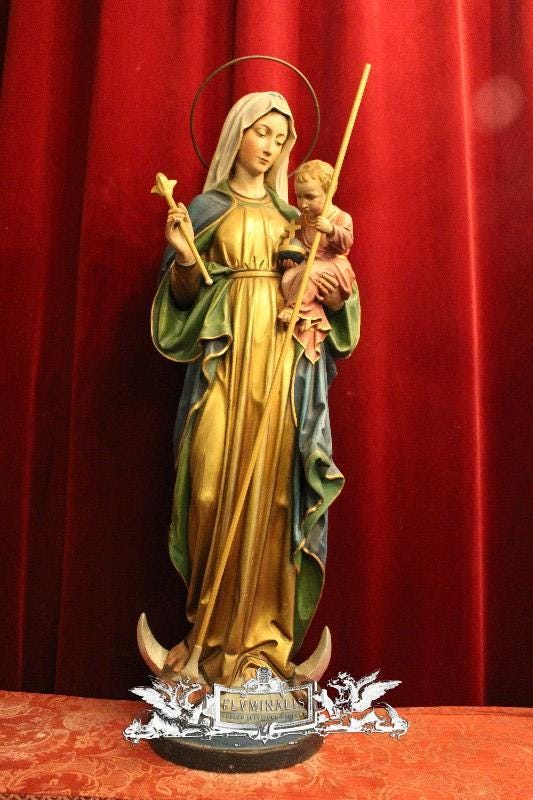
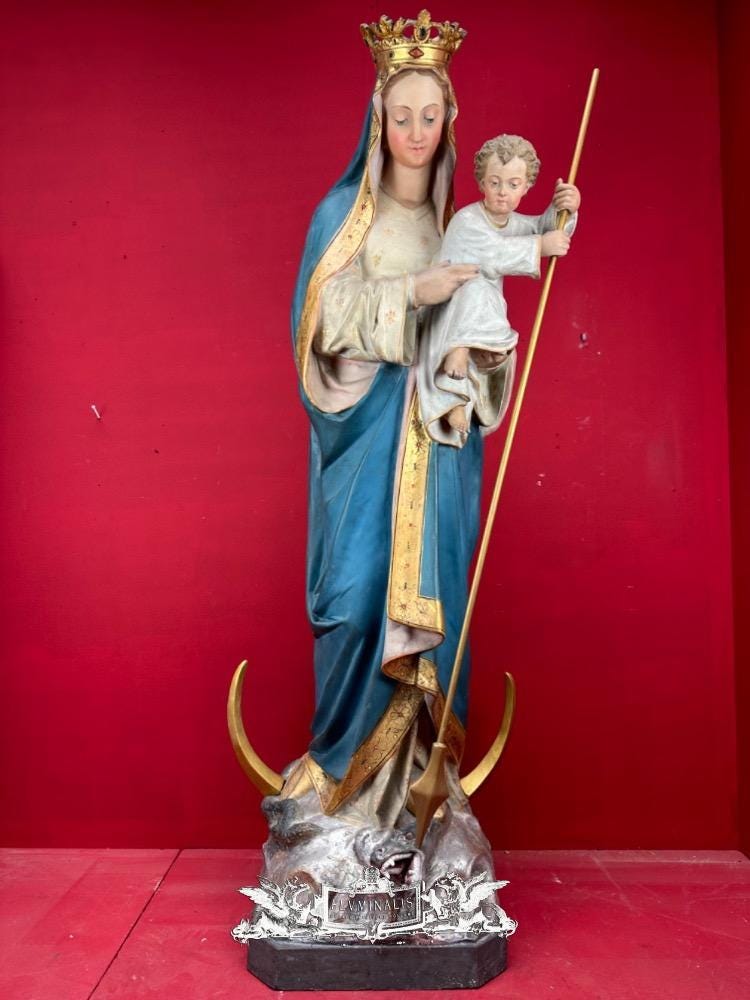
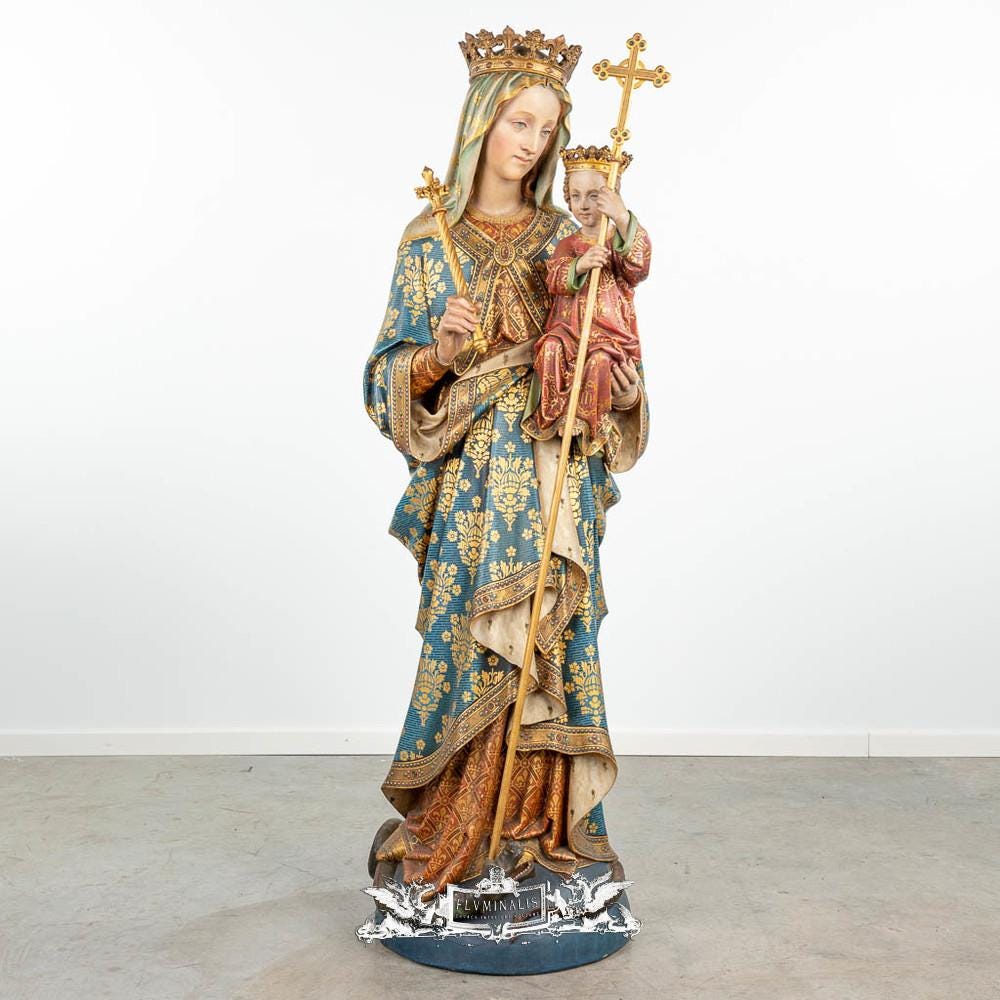
At this juncture I am tempted to say that the two statues presented in the England section above are also Flemish productions, but it suffices to leave some mysteries unsolved and simply enjoy this gallery as a whole, appreciating the pains that artists across space and time have taken to beautifully depict this unique genre of the Immaculate Conception.